
Memorial Ideas for Mom: 20 Heartfelt Ways to Keep Her Memory Alive
Discover 20 deeply detailed memorial ideas for a mom who has passed — from living tributes and personal keepsakes to annual rituals and digital memorials — with enough detail to actually carry each one out.
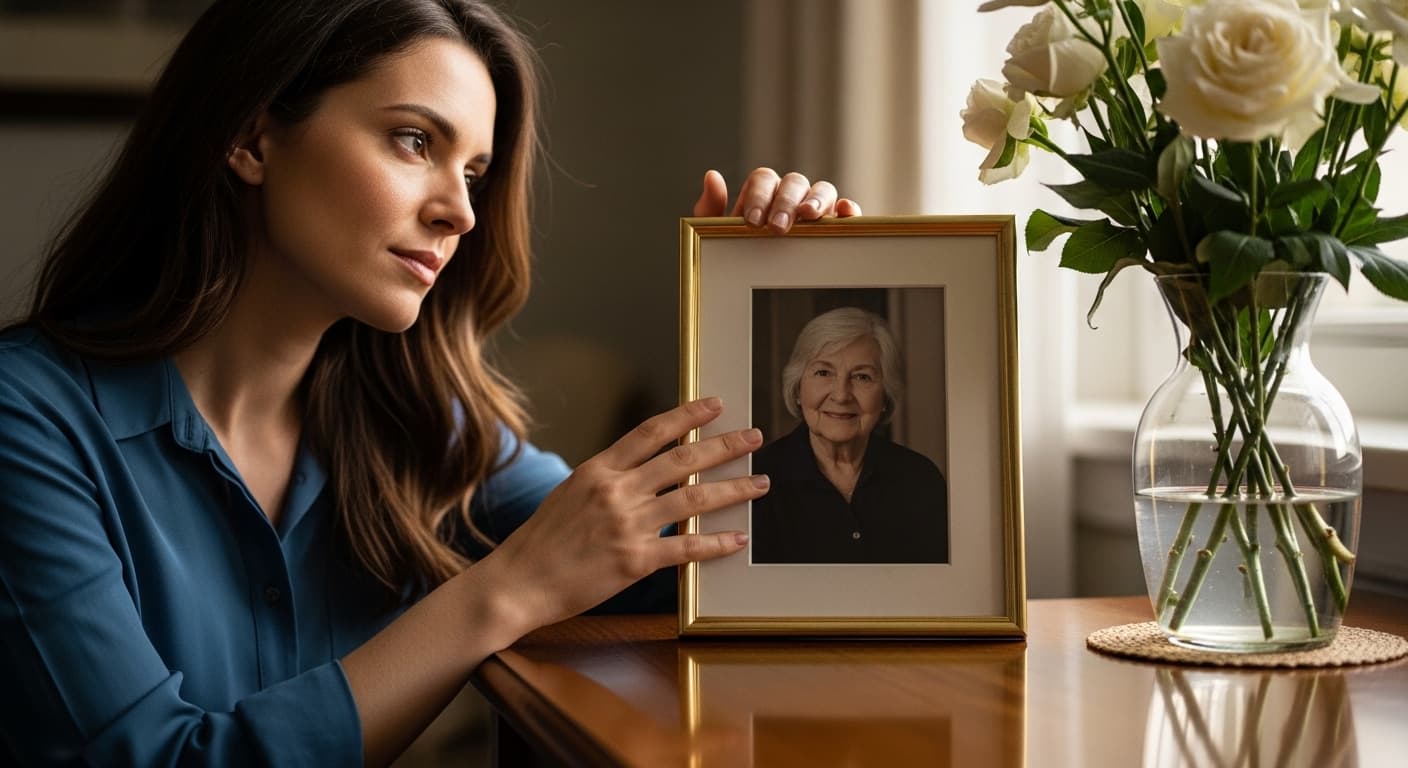
The most meaningful memorial ideas for a mom who has passed are the ones rooted in who she specifically was — her hobbies, her phrases, the way she showed love. Here are 20 detailed ideas, from living tributes to everyday rituals, each with enough detail to actually carry out.
Grief counselors consistently find that active remembrance — doing something tangible in honor of a person — eases the weight of mourning in ways that passive grieving cannot. When you make her recipes, tend a garden she loved, or sit with others who knew her, you are not holding on in a way that delays healing. You are weaving her into the continuing story of your family. That distinction matters.
Whether you lost your mother recently or are approaching her first anniversary, this guide covers a wide range of options — some you can do alone, some with family, some that cost very little and some that create something lasting. Work through the list and notice which ideas feel like her. Those are the ones worth pursuing.
Key Takeaways
Root ideas in her personality — the most lasting tributes reflect her specific hobbies, values, and routines, not generic memorial gestures
Living tributes keep growing — a memorial tree, garden, or scholarship fund creates something that outlasts any single gathering
Recipes and handwriting are underrated — digitising her handwritten recipe cards and turning them into a family cookbook is one of the most-requested but least-covered memorial ideas
Annual rituals anchor grief — marking her birthday, death anniversary, and Mother's Day with a consistent tradition gives grief somewhere to go each year
A digital memorial extends the circle — a memorial page lets family members who couldn't attend share memories and photos from anywhere in the world
You don't need to do everything — choose two or three ideas that feel right and do those well, rather than attempting every option at once
Living Tributes: Memorials That Grow Over Time
Bereavement researchers and grief counselors alike point to living memorials as among the most sustaining tributes families create. Unlike a single-day service, they continue to exist — and to grow — long after the acute period of mourning has passed.
1. Plant a memorial tree. Choose a species that held meaning for her — the apple tree she kept in the backyard, the magnolia she always stopped to admire, a native oak for a mother who loved the outdoors. Plant it somewhere the family can visit: a garden, a churchyard, or through a reforestation program if space is limited. Attach a small weatherproof marker with her name and dates. Each spring, when the tree leafs out or blooms, it does its own quiet work of remembrance. For a full guide to choosing species, location, and dedication options, read our article on planting a tree in memory of someone.
2. Create a memorial garden. If she was a gardener, consider dedicating a corner of an existing garden — or an entire new bed — to her memory. Fill it with the plants she grew, the colours she preferred, the herbs she kept in her kitchen. Tuck in a small stone with her name engraved. A memorial garden becomes a place the family returns to naturally: for quiet reflection, for Saturday morning coffees, for the annual ritual of planting bulbs she would have chosen herself. For inspiration on layout and planting combinations, see our guide to memorial garden ideas.
3. Establish a scholarship in her name. If she valued education — her own or other people's — a named scholarship keeps her legacy connected to opportunity. It does not need to be large. Contact a local school, community college, or trade program and ask about the minimum amount required to establish an annual award. Include a brief description of who she was in the scholarship criteria. Future recipients will carry her name forward through their own lives, and the family receives a quiet reminder of her each year when the award is given.
4. Donate to a cause she cared about. Whether she volunteered at a food bank, supported a cancer charity, or quietly sent money to an animal rescue every month, a directed donation in her memory honours the values she lived by. Ask family and friends to contribute in lieu of flowers. Many charities will send an acknowledgement card to the family, which itself becomes a small keepsake — a record of how widely her generosity was felt.
Preserving Her Recipes and Handwriting: The Most Requested Memorial Idea
In our experience helping families through memorial planning, one request comes up more often than almost any other: "I want to save her handwritten recipe cards." Most memorial guides mention a recipe book in a single line. This idea deserves much more than that.
5. Create a family recipe book from her handwritten cards. Gather every handwritten recipe you can find — the index cards in the kitchen drawer, the notes in the margins of her cookbooks, the scrap of paper tucked into her binder. Scan or photograph each one at high resolution before anything else, because paper is fragile and accidents happen. Then work through them and decide on your format: a simple spiral-bound print-at-home collection, or a printed hardcover through a service like Blurb or Bookemon. Include a photo of her in the kitchen, a short introduction about her cooking style, and any notes the family remembers about specific dishes ("She always doubled the cinnamon in this one"). Print several copies for different branches of the family.
6. Turn her handwriting into a font or jewellery inscription. Services such as Fontifier and YourFonts allow you to scan a page of someone's handwriting and generate a usable typeface from it. Once you have the font, you can typeset the recipe book in her own hand, print cards with her writing, or use it wherever her words appear. Separately, local engravers and online memorial jewellery makers can transfer a handwriting sample — her signature, a phrase she used, "Love, Mum" — onto a locket, a ring, or a pendant. Grief counselors note that wearable keepsakes carry particular comfort for people who are tactile by nature.
7. Archive her letters, notes, and cards. Most families have a drawer or box filled with birthday cards, letters, and notes written in her hand over the decades. Scan everything. Store the digital files in at least two locations (a cloud service and an external drive) and label them clearly by year or occasion. Then sort through the originals and choose a selection to frame, compile into an archival binder, or preserve in acid-free sleeves. Future grandchildren and great-grandchildren will encounter her voice through those papers in a way photographs alone cannot provide.
Quick Memorial Ideas for Any Budget
Write a letter to her — seal it and keep it in a memory box, or read it aloud at her graveside on the anniversary of her passing
Cook her signature dish — make it on her birthday, Mother's Day, or any ordinary Tuesday when you miss her
Frame a favourite photo — choose one that shows her laughing or doing something she loved, not just a formal portrait
Share a memory on a memorial page — invite the whole family to contribute so distant relatives can participate
Create a playlist of her favourite songs — name it after her and share it with family; play it on meaningful days
Light a candle on significant dates — a simple, low-cost ritual that gives the day a gentle structure
Personal Keepsakes and Heirlooms to Honour Her Life
Mental health professionals who work in bereavement frequently observe that tangible objects help anchor grief — not because they replace the person, but because they provide a physical point of connection when emotional connection feels impossibly distant.
8. Commission a memory quilt from her clothing. Gather fabric from items of clothing she wore frequently — a favourite cardigan, a Sunday dress, a collection of her T-shirts. Take them to a quilter (search locally or through Etsy) and ask for a throw or a lap quilt. The finished piece is warm, functional, and unmistakably hers. Many families find that a grandchild sleeping under a quilt made from Grandma's clothes is one of the most natural forms of remembrance they've encountered.
9. Create a memorial photo book. Pull together photographs from every chapter of her life — childhood, young adulthood, her years as a parent, her later decades — and arrange them chronologically or thematically in a printed photo book. Services like Artifact Uprising, Chatbooks, or Shutterfly make the process straightforward. Write captions that describe the context of each photo: where it was taken, who else is in the frame, what was happening in her life at that point. The photo book becomes a narrative of her life, not just a collection of images.
10. Create a memory box. Choose a beautiful wooden box or tin and fill it with objects that belonged to her or that represent her: a perfume bottle, her reading glasses, a pocket diary, a small piece of jewellery, pressed flowers from her garden, a card in her handwriting. Keep it somewhere accessible — a shelf in the living room, a bedside table — rather than stored away. A memory box is meant to be opened, handled, and revisited.
11. Make a memory board for a gathering. If the family is coming together — whether for a memorial service, a celebration of life, or an anniversary gathering — a memory board gives guests something to look at and talk about. Collect photos, handwritten notes, ticket stubs, postcards, and small mementos and arrange them on a corkboard or large framed board. For detailed ideas on layouts and materials, see our guide on memory board ideas for a funeral or celebration of life.
Community and Giving Back in Her Name
Many mothers leave behind communities they quietly sustained — their church, their neighbourhood association, their children's school, the local shelter they supported for years. Bereaved families often find that giving back through those same channels offers a sense of continuity that private remembrance alone does not.
12. Volunteer for a cause she supported. Gather a small group of family members or friends and commit to a volunteer day at an organisation she cared about. If she tutored at a literacy programme, show up to read with children. If she dropped off donations at an animal shelter every month, spend an afternoon there together. Doing something useful in her name channels the helplessness of grief into action — which bereavement counselors describe as one of the healthiest responses to loss.
13. Start an annual community fundraiser. Organise a walk, a bake sale, a community dinner, or a memorial run in her honour each year, with proceeds going to her chosen charity. These events serve a dual purpose: they keep her name present in the community, and they give family and friends a reason to come together around her memory on a regular basis. The first year is the hardest to organise; after that, it acquires its own momentum.
14. Dedicate a memorial bench. Check with your local parks department, church grounds, or favourite walking trail about bench dedication programmes. A bench with a small engraved plaque — her name, her dates, and a phrase that was hers — becomes a semi-public tribute that members of the community encounter naturally. Family members know where to go when they want to sit quietly near her name.
“Grief is the price we pay for love. And that price is always worth it.”
Annual Remembrance Rituals: Giving Grief Somewhere to Go Each Year
Grief does not follow a calendar, but grief counselors and bereavement researchers consistently note that recurring rituals — small, predictable acts tied to significant dates — give mourning a structure that prevents it from becoming shapeless. The dates that tend to carry the most weight are her birthday, the anniversary of her passing, and Mother's Day.
15. Honour her on her birthday. Her birthday does not have to be a day of sadness. Many families choose to mark it by doing something she loved: visiting her favourite restaurant, walking her favourite route, baking her cake and lighting candles. Others read from a collection of messages written to her over the years. For more ideas on this specific date, see our article on what is a heavenly birthday and how to celebrate it.
16. Create a death anniversary tradition. The anniversary of her passing is often the hardest day of the year. A simple tradition — lighting a candle, visiting her grave or a place she loved, gathering the family for a meal — gives the day a shape rather than leaving it as an open wound. The tradition does not need to be elaborate. It needs to be consistent. For a broad collection of options suited to different family dynamics, our guide on death anniversary ideas covers fifteen meaningful approaches.
17. Reclaim Mother's Day. For many grieving adult children, Mother's Day is the single most difficult day of the year. One approach that bereaved families often find helpful is to actively reclaim the day rather than endure it passively. Plan something intentional: visit a place she loved, cook her recipe with her grandchildren, watch her favourite film. Some families write a collective letter to her and read it aloud. Others simply gather for a meal and let her name come up naturally in conversation. The goal is to make Mother's Day a day that still belongs to her rather than a blank, painful space.
18. Hold an annual gathering on a meaningful date. Some families choose a date outside the obvious anniversaries — the first day of her favourite season, the date of a meaningful family trip, the feast day of her patron saint. An annual gathering need not be formal: a Sunday lunch, a picnic at a favourite park, or an evening of old photos and stories is enough. The key is consistency. When the same people show up in the same spirit year after year, the gathering itself becomes part of her legacy.
How to Create a Digital Memorial for Your Mum
Gather your materials
Collect photos from across her life — childhood through recent years. Locate any video clips, audio recordings, and written pieces (letters, diary entries, her own words). Having everything in one folder before you begin makes the process much smoother.
Choose a platform
A dedicated memorial page — as opposed to a social media tribute — keeps her story in a permanent, searchable location that the whole family can access and contribute to over time. It also means distant relatives and old friends can find it without needing to be connected to a family member's personal account.
Write a biography
Start with the basics: her full name, dates, the places she lived. Then expand into the personal — the career she built, the family she raised, the things she was known for. If writing is difficult right now, consider using our AI obituary writer to help draft a starting point, which you can then personalise.
Upload photos and stories
Add a selection of photos spanning different periods of her life. Invite family members to contribute their own stories and photographs — the memorial page becomes richer every time someone adds a memory. Even a brief story from a neighbour or a colleague adds a dimension of her life that immediate family may not have witnessed.
Share the page with her community
Send the link to family, friends, former colleagues, and anyone who knew her. A memorial page is not just for the immediate family — it is for everyone she touched. Many families find that people they had lost touch with reach out through the page, sharing memories and photographs the family had never seen.
Digital Memorials: Preserving Her Story for Future Generations
One of the most significant gaps in how people honour a mother's memory is the absence of a central place where her story lives. Social media posts scatter and disappear from feeds. Physical albums reach only the people in the same room. A dedicated digital memorial gathers her photographs, her biography, her family's stories, and tributes from her wider community into a single permanent space.
19. Create a lasting memorial page. A memorial page differs from a social media post in two important ways: it is permanent, and it is collaborative. Family members in different countries can each upload their photographs, write their memories, and leave messages — without needing to coordinate or be in the same place at the same time. The page becomes a living tribute that grows as more people contribute. Grief counselors who work with geographically dispersed families describe digital memorials as one of the most practical tools available for collective mourning.
Creating a page for your mum takes less than an hour. You upload an obituary or biography, add photographs, and share the link with her community. From that point, anyone with the link can contribute. The result is a tribute that reflects not just who she was to you, but who she was to every person whose life she touched.
20. Write and share her eulogy or life story. If you delivered a eulogy at her service — or wish you had — writing it out in full and sharing it on her memorial page or through family channels ensures that her life story is preserved in your own words. For examples and a writing framework specific to mothers, see our guide to eulogy examples for a mother. The act of writing about someone you've lost is itself a form of mourning that many grief therapists actively recommend — it forces you to articulate what made her irreplaceable, and that articulation is often the beginning of a more settled grief.
Create a Lasting Digital Memorial for Your Mum
A MemoriTree memorial page brings her photographs, biography, and family stories together in one permanent place — where everyone who loved her can contribute and revisit her memory for years to come.
Create Her Memorial PageMemoriTree
MemoriTree editorial team.