
Memorial Garden Ideas: 20 Ways to Create a Living Space of Remembrance
Twenty memorial garden ideas for every space and budget — from a full backyard rose garden to a single container on a balcony — plus plant symbolism, step-by-step creation guide, and the only cost breakdown you'll find online.
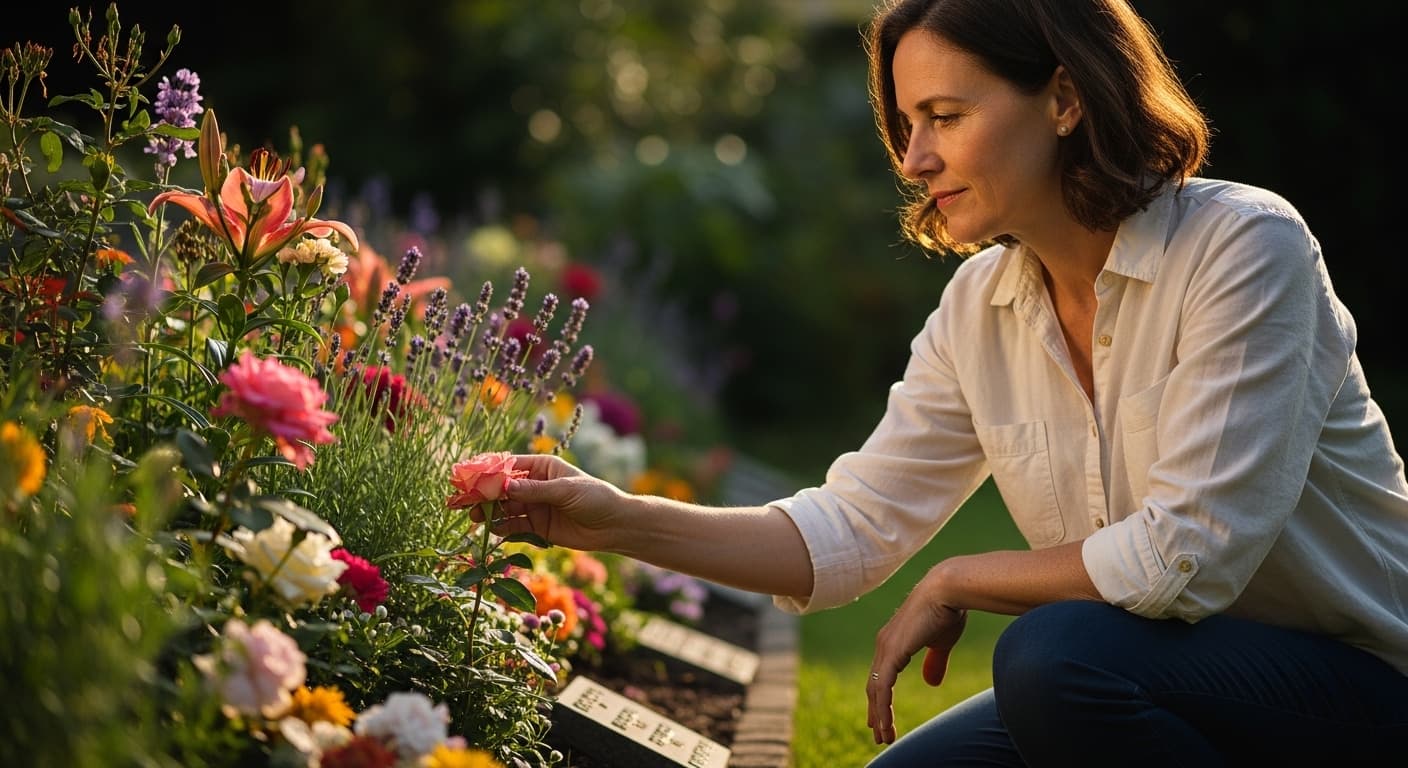
A memorial garden is a living space dedicated to the memory of someone you have lost. Here are 20 memorial garden ideas — from a full backyard rose garden to a single potted plant on a studio balcony — ranked from largest to smallest:
Large spaces (6+ ideas): rose garden, meditation path, water feature, memorial bench area, butterfly garden, stone circle.
Small spaces and containers (5 ideas): balcony container garden, window box, indoor succulent collection, fairy garden, culinary herb garden.
Pet memorials, cremation gardens, and community spaces are also covered below, along with a plant symbolism guide, a 7-step creation process, and the only detailed budget breakdown available for this topic.
Unlike a static monument, a memorial garden changes with the seasons — it blooms, rests, and returns each year, offering ongoing moments of connection with the person or pet you are remembering. If you want to combine your garden with a permanent tribute, our guide on planting a tree in memory of someone covers the full process of memorial tree planting, including species selection and dedication ceremonies.
Key Takeaways
Any space works — a memorial garden can be a full backyard or a single pot; the intention matters more than the square footage
Choose plants with meaning — rosemary, forget-me-nots, and white lilies all carry centuries of grief symbolism that enriches the tribute
A focal point anchors the space — one central element (bench, stone, birdbath) gives the garden a clear sense of purpose and a place to pause
Seasonal planning prevents bare winters — planting a mix of spring bulbs, summer perennials, and evergreens keeps the garden alive year-round
Budget starts at around £30 — a meaningful container memorial garden costs far less than most people expect; see the budget guide below
Ashes can be incorporated safely — cremated remains are alkaline and high in phosphorus; mixing with soil or adding to a dedicated urn planter is the recommended approach
Memorial Garden Ideas for Large Spaces
If you have a garden, a dedicated plot, or access to outdoor land, these six ideas give a memorial garden the scale and permanence it deserves. Each can be adapted — start with one element and build over time as the space evolves and your grief does the same.
Idea 1: The Rose Garden
Roses have been associated with remembrance for more than two thousand years. A memorial rose garden built around two or three climbing or shrub roses — planted in the person's favourite colours — becomes a living portrait of who they were. Add a small plaque at the base identifying the person and the date. Heritage varieties like 'Gertrude Jekyll' (deep pink, fragrant) and 'Mortimer Sackler' (pale pink, arching) are particularly well-suited to this purpose. Honoring a loved one through a living rose garden creates a tribute that returns every June and July, exactly when it is needed most.
Idea 2: The Meditation Path
A curved path — even one just three metres long — changes the way a person moves through a garden. Laid with stepping stones, reclaimed brick, or gravel, a meditation path invites slow, deliberate walking. Plant low-growing herbs like thyme or chamomile between the stones so that each step releases fragrance. Place a simple seat at the end: somewhere to arrive and be still. This design works particularly well for people who process grief through movement rather than sitting.
Idea 3: The Water Feature
Moving water introduces sound into a memorial space — something that fills silence without demanding attention. A small recirculating fountain, a birdbath with a dripper attachment, or a half-barrel pond planted with water lilies all work within a modest budget. Water features attract wildlife, which brings an additional layer of life to a space built around loss. Solar-powered pump kits require no mains connection and cost from around £25.
Idea 4: The Memorial Bench Area
A dedicated bench — positioned to face a view, a planting, or the sun at the hour it mattered most to the person you are remembering — becomes the gravitational centre of a memorial garden. Commission a small engraved plaque to fix to the back of the bench, or order a custom cast-metal seat plate with their name and dates. Surround the bench with low plantings: lavender for fragrance, ornamental grasses for movement, spring bulbs for annual colour. A memorial bench area is one of the most searched-for ideas in this category — and one of the most deeply felt.
Idea 5: The Butterfly Garden
In many cultures, butterflies are understood as symbols of transformation and the continuation of the soul. A butterfly garden planted with buddleia (butterfly bush), echinacea, verbena bonariensis, and single-flowered dahlias will attract multiple species from spring through to autumn. Add a shallow water source and a few flat rocks for basking. A handmade ceramic butterfly stake or a weather-resistant butterfly house completes the tribute without making it feel over-designed.
Idea 6: The Stone Circle
A stone circle — five to ten stones arranged in an ellipse around a central planting — creates a sense of boundary and sanctity without any construction. Each stone can be engraved with a word, a date, or left natural. Plant the centre with something permanent: a small ornamental tree, a large ornamental grass, or a clipped evergreen sphere. This approach is particularly effective in large lawns where a more architectural element is needed to define the memorial space from the surrounding garden.
Small Space and Container Memorial Gardens
You do not need outdoor land to create a meaningful memorial garden. These five ideas work for balconies, windowsills, and indoor spaces — proving that the intention behind a memorial matters more than its dimensions.
Idea 7: The Balcony Container Garden
Three to five containers — a large terracotta pot, a wooden trough, and a hanging basket — can hold a complete memorial planting on a balcony of any size. Choose a dwarf rose as a focal point, underplanted with forget-me-nots and trailing lobelia. Add a small solar lantern and a weather-resistant photo frame or memorial tile. The contained nature of this garden makes it easier to maintain through periods of grief when a larger space might feel overwhelming.
Idea 8: The Window Box
A window box fitted to an outside sill or a ground-floor window brings the memorial into the view of the house rather than requiring a visit to the garden. Plant with seasonal combinations — violas and narcissi in spring, trailing petunias and bacopa in summer, ornamental kale and heather in autumn. A small engraved tag pressed into the compost gives the window box its purpose without advertising it to passers-by.
Idea 9: The Indoor Succulent Collection
For people without any outdoor space, a curated collection of succulents on a windowsill or shelf creates a living memorial that requires minimal maintenance. Choose species with names that carry meaning — Echeveria 'Perle von Nürnberg' (rose-pink rosette), Haworthia (architectural, evergreen), Sedum morganianum (trailing, abundant). Arrange in a tray with a small framed photograph and a personal object. Succulents are particularly appropriate for people who feel they cannot reliably care for plants during grief — they thrive on relative neglect.
Idea 10: The Fairy Garden
A fairy garden — a miniature landscape built in a large container, shallow trough, or old wheelbarrow — is particularly meaningful when the person being remembered was a child, loved gardens, or had a playful spirit. Use miniature plants (dwarf conifers, thyme, moss), small stones, and tiny handcrafted elements to build a world in miniature. This is also one of the most effective memorial garden ideas to involve children in — the act of building and tending the garden gives younger family members a concrete, manageable way to express their grief.
Idea 11: The Culinary Herb Garden
If the person you are remembering loved cooking, a herb garden built around their favourite flavours brings memory into daily life every time you cook. Plant rosemary (for remembrance), thyme, sage, and mint. Each harvest becomes a small act of connection. A culinary herb garden works in a window box, on a kitchen windowsill, or in a small raised bed. Add a handwritten recipe card under glass, framed beside the herbs, for an additional layer of personal tribute.
Pet Memorial Garden Ideas
The loss of a pet is a genuine bereavement, and a pet memorial garden deserves the same thoughtfulness as any other tribute. These ideas are specifically designed to honour companion animals.
A paw print stepping stone — cast from the pet's actual paw print using a garden stone kit (£10–£15) — becomes a permanent, deeply personal feature. Place it at the entrance to the garden or at a favourite resting spot.
A dedicated planting of their favourite spot honours the places where your pet spent their time. If they loved a particular patch of sun or a corner of the lawn, transform it into a planted area with a small marker. Use plants in the pet's favourite colours if they are known, or choose universally peaceful plantings: white cosmos, soft-blue agapanthus, silver-leaved artemisia.
An engraved garden stone or slate marker with the pet's name, dates, and a short phrase — "Faithful companion", "Forever in the garden" — provides a permanent focal point for the tribute without requiring a formal burial plot. For more ideas on honouring a pet after loss, see our guide on pet memorial ideas.
A birdbath dedicated to the pet's memory works especially well for pets who watched birds from a window or loved the garden. Engrave the birdbath base or add a ceramic tile with the pet's name. Wildlife visiting the bath brings ongoing life to the tribute.
A catnip or wildflower meadow patch — even in a 1m² plot — creates a naturalistic tribute area that requires minimal maintenance and provides genuine habitat value. This approach is particularly meaningful if the pet was a cat or if the owner values ecological contribution as part of their memorial practice.
Memorial Plants and Their Meanings
Choosing plants with established symbolic meaning gives a memorial garden additional depth. The table below draws from horticultural history, Victorian flower language (floriography), and contemporary memorial practice.
White Lily — Purity, restored innocence after death. One of the most universally recognised memorial flowers, common at funerals and condolence tributes across many cultures.
Rosemary — Remembrance. Shakespeare wrote "There's rosemary, that's for remembrance" in Hamlet. An evergreen shrub that keeps its scent year-round; brushing the leaves releases fragrance and memory simultaneously.
Forget-Me-Not — Faithful memory and enduring love. The name itself carries the tribute. A self-seeding annual that spreads year after year, symbolising the way memory perpetuates itself.
Oak — Strength, endurance, the long span of a life. A memorial oak is a century-long commitment — an appropriate choice when planting for a person whose legacy will outlast the immediate generation. See our full guide on planting a tree in memory of someone for species selection and planting guidance.
Willow — Grief, mourning, the acceptance of loss. The weeping willow's drooping form has made it a cemetery staple for centuries. A miniature weeping willow (Salix caprea 'Kilmarnock') is suitable for container planting on a large terrace.
Lavender — Serenity, devotion, calm. The fragrance of lavender is consistently cited in grief research as one of the most soothing scents. A lavender hedge along a memorial path creates a multi-sensory experience of quiet and peace.
White Rose — Purity and reverence. Used in memorial contexts across European and American traditions. The white rose 'Winchester Cathedral' is a particularly beautiful choice for a dedicated memorial planting.
Bluebell — Constancy, gratitude, and everlasting love. A woodland-floor native that naturalises under trees and returns reliably each spring — ideal beneath a memorial tree.
Chrysanthemum — In East Asian and many European traditions, the chrysanthemum is explicitly a flower of death and remembrance; white chrysanthemums are the most common grave flower in Japan, China, Korea, and much of southern Europe.
Poppy — Remembrance of the war dead in Commonwealth cultures, but also a symbol of sleep, peace, and the transition between life and death in classical mythology. Red poppies are self-seeding and will naturalise in gravel or at the base of a stone circle.
Ivy — Fidelity, eternal life, the endurance of connection. An evergreen climber that will grow over a wall or memorial structure, keeping it clothed year-round.
How to Create a Memorial Garden
Choose your location and scale
Before selecting plants or accessories, decide on the scale of the garden. A full garden plot, a dedicated raised bed, a container grouping, or a single pot on a windowsill — all are valid starting points. The right scale is the one you can realistically maintain during grief, which often means starting smaller than you initially plan and expanding over time.
Select a focal point
Every meaningful memorial garden has one element that anchors the space — a bench, a memorial stone, a birdbath, a planted urn, or a tree. This focal point gives the garden its identity and provides a specific place to pause, sit, and remember. Choose this element first; the planting grows around it.
Choose your plants with intention
Select two or three plants for their symbolic meaning (see the plant guide above), supplemented by practical choices for your climate and soil. Aim for a mix of: one permanent structural element (evergreen shrub or small tree), one seasonal perennial that returns each year, and one annual or bulb for colour at the time of year that matters most — a birthday, anniversary, or the season of passing.
Prepare the ground properly
Good soil preparation is the single most important factor in plant survival. Remove weeds thoroughly, incorporate compost or well-rotted manure, and check drainage before planting. For container gardens, use a high-quality peat-free compost mixed with perlite for drainage. Poor soil preparation is the primary cause of memorial garden failure in the first season.
Plant and personalise
Plant in autumn or early spring for best establishment. After planting, add personalising elements: an engraved stone, a windchime, a ceramic plaque, a dedicated solar lantern. These elements give the garden its identity as a memorial rather than simply a garden. Keep personalisation proportionate — one or two meaningful objects have more impact than a cluttered collection.
Create a maintenance rhythm
A memorial garden that becomes overgrown can compound grief rather than ease it. Build a simple seasonal maintenance rhythm: a spring tidy, a summer deadhead, an autumn clear-up, and a winter mulch. For people who find maintenance difficult during active grief, choose low-maintenance plants (lavender, ornamental grasses, sedums, evergreen shrubs) and consider mulching heavily to reduce weeding.
Invite others to contribute
A memorial garden becomes more powerful when others share in its creation and maintenance. Invite family members to choose a plant, write a dedication, or contribute a stone. Over time, the garden accumulates layers of meaning as new elements are added on anniversaries, birthdays, and the anniversaries of death. This communal dimension transforms a personal memorial into a shared space of remembrance.
Memorial Garden Accessories
The right accessories give a memorial garden its identity as a dedicated tribute rather than an ordinary garden. Each of the following categories works at any scale, from a full garden to a single container on a balcony.
Memorial plaques and stones. A weather-resistant engraved slate, granite, or cast-resin plaque is the most direct way to identify the garden's purpose. Personalise with a name, dates, and a short phrase. For wording guidance, our guide on memorial plaque wording covers the full range of inscription styles from formal to personal.
Stepping stones with inscriptions. Flat stones set into the ground with engraved text, ceramic inlays, or mosaic work bring meaning to the paths between plantings. DIY kits allow families to press handprints, paw prints, or handwriting into cement before firing — particularly meaningful for children's or pet memorials.
Wind chimes. Sound in a memorial garden creates presence without requiring attention. Bamboo chimes produce a softer, more contemplative tone than metal; copper develops a beautiful patina over time. Hang from a pergola, a branch, or a purpose-made shepherd's crook stake.
Solar garden lights. A dedicated solar lantern — switched on at dusk and extinguished at dawn — gives the memorial garden a presence after dark. Glass lanterns with warm LEDs create an effect similar to candlelight without the fire risk. Set one beside the focal point or scatter small stake lights through the planting for a more ambient effect.
Birdbath. As noted in the pet memorial section, a birdbath dedicated to the person's memory brings wildlife and movement to the garden. Engrave the base or add a ceramic tile. Position where it is visible from the house — the daily visit of birds creates small, repeated moments of connection.
Ceramic or glass garden art. Handmade ceramic stakes, glass spheres, or fused-glass sun-catchers add colour and texture to a planting without dominating it. Many potters and glassblowers accept commissions for personalised pieces — a particularly meaningful option when the person remembered was creative themselves.
Cremation Garden Ideas
Incorporating cremated remains into a garden is legal in the UK on private land with landowner permission, and increasingly common as an alternative to scattering remains in a single location. Here are the most practical and meaningful approaches.
Mix ashes into the soil at planting time. Cremated remains are alkaline (pH 11–12) and high in phosphorus, which can affect soil chemistry. The recommended approach is to mix approximately one cup of ashes with two to three cups of compost or potting mix before incorporating into the planting hole. This distributes the impact and ensures plants establish successfully. Acid-loving plants (rhododendrons, azaleas, heathers) are less suitable; lavender, roses, and most ornamental grasses are well-suited.
Use a biodegradable cremation urn planted as a permanent feature. Several specialist manufacturers produce planting urns — containers designed to hold cremated remains within a memorial planting. The urn is planted directly into the ground, where it biodegrades over several years, releasing the remains into the soil. A tree or large shrub planted directly above creates a living monument. This is one of the most meaningful cremation garden designs available.
A dedicated urn planter for a balcony or indoor space. For those without garden access, specialist memorial urn planters — watertight, sealed containers with a removable planting tray above a sealed lower chamber — allow cremated remains to be kept in a planting without direct soil contact. These are designed for indoor or covered outdoor use and provide a complete memorial garden solution in a single container.
Scatter ashes in a dedicated area and plant above. If you prefer to scatter rather than inter remains in the soil, designate a specific area of the garden, scatter the ashes, and then create a dedicated planting above and around the area. Mark the spot with a memorial stone or engraved paver. Over time, the planting grows into the tribute and the soil incorporates the remains naturally.
Note: Always check local regulations before incorporating ashes into any garden space, particularly if the land might be sold in future. Consider documenting the location with a note kept with estate papers.
Community Memorial Gardens
When a loss affects a whole community — a school, a workplace, a neighbourhood — a community memorial garden provides a shared space for collective grief and ongoing remembrance.
Community gardens are most effective when they are participatory from the beginning. Involve the people who will use the space in its design: what plants should be included? Where should the focal point sit? What should the inscription say? A memorial garden that reflects the community's own choices becomes genuinely theirs in a way that a top-down installation rarely does.
Consider a dedication event when the garden is first planted. A simple gathering — perhaps planting the first bulbs together, or installing the memorial stone — marks the garden's beginning and gives the community a ritual moment of shared acknowledgment. For larger events, our guide on 50 celebration of life ideas includes outdoor ceremony formats that work well alongside a garden dedication.
Public parks and councils sometimes offer memorial bench or tree sponsorship schemes that allow families and communities to create a permanent tribute within an existing managed space. These require no maintenance commitment from the family and are increasingly available in urban areas as demand grows.
For ongoing care, establish a simple rota among community members, or fund ongoing maintenance through a small annual contribution from the group. The shared act of tending the garden keeps the community connected to one another and to the person remembered.
Maintaining Your Memorial Garden Year-Round
A memorial garden that is neglected during the harder months can become a source of additional distress rather than comfort. The following seasonal guide keeps the garden alive and meaningful across the year with minimal time investment.
Spring (March–May)
Cut back any frost-damaged stems to healthy growth. Divide and replant overcrowded perennials. Plant summer-flowering bulbs (dahlias, gladioli, alliums). Apply a slow-release granular feed to borders. Plant out any new purchases while the soil is moist. Spring is also the best time to add new elements — a fresh memorial stone, a replacement plaque, or a new plant on the anniversary of the person's birthday.
Summer (June–August)
Deadhead roses and perennials regularly to extend the flowering season. Water containers daily in dry spells; borders weekly if there is no significant rainfall. Apply a liquid feed to containers every two weeks. Cut lavender lightly after the first flush of flowers to encourage a second. Weed regularly — a tidy garden reinforces the sense of care and intention behind the tribute.
Autumn (September–November)
Plant spring bulbs (tulips, narcissi, bluebells, crocuses) for the following year's display. Cut back herbaceous perennials once they have finished flowering, or leave seed heads for winter structure and wildlife value. Apply a thick mulch of garden compost or wood chip around plants to protect roots and suppress weeds. Plant new shrubs and trees — autumn planting gives the best establishment results.
Winter (December–February)
Check container plants are not waterlogged; move tender plants under cover or against a sheltered wall. Order seed catalogues and plan any additions for spring. Clean and oil garden tools. A winter visit to the memorial garden — even a brief one — maintains the connection through the months when most growth is invisible and the anniversary season (Christmas, New Year) makes loss feel most acute.
Memorial Garden Budget Guide
This is the only detailed cost breakdown for memorial garden creation published online — most sources avoid specifics. The following ranges are based on UK retail prices in 2026 for the most common approaches.
Container memorial garden (balcony or small space): £30–£120 — Two large terracotta or glazed containers (£15–£40 each), three to four plants (£5–£12 each), a bag of peat-free compost (£8–£12), one solar lantern (£8–£15), one memorial stake or small plaque (£10–£25). This is the most accessible entry point.
Dedicated garden bed with planting (2m × 2m): £150–£400 — Soil preparation and compost (£20–£40), five to eight plants including one focal shrub (£50–£150), memorial stone or engraved plaque (£30–£80), stepping stones (£20–£60), solar lights (£15–£40), mulch (£10–£25).
Memorial bench with planting: £300–£900 — Timber or cast-iron garden bench (£80–£400), engraved plaque for the bench (£50–£120), surrounding planting (£80–£200), installation if required (£50–£150).
Memorial rose garden (4m × 3m): £400–£1,200 — Three to five established shrub or climbing roses (£15–£40 each), trellis or obelisks if needed (£30–£80 each), soil preparation and compost (£40–£80), underplanting (£30–£80), memorial plaque or stone (£30–£100), optional water feature (£25–£150).
Memorial tree planting with dedication: £100–£600 — Ornamental or heritage fruit tree (£30–£150), stake and tie (£5–£10), tree guard if needed (£5–£20), dedication plaque (£30–£80), planting and aftercare (DIY or professional: £0–£300). For full guidance on choosing and planting a memorial tree, see our guide on planting a tree in memory of someone.
Cremation urn planter (specialist product): £60–£300 — Biodegradable in-ground urns start at around £60; above-ground sealed urn planters range from £80–£300 depending on material and size. Tree saplings to plant above: £20–£100.
The most meaningful memorial gardens are rarely the most expensive. A single rosemary plant in a clay pot, placed on a windowsill with a handwritten label, carries as much intention as a landscaped garden. Spend what you can; the garden will grow over time.
“Gardening is the art that uses flowers and plants as paint, and the soil and sky as canvas. When we plant in memory of someone we love, we turn loss into something that blooms.”
Create a Digital Space Alongside Your Memorial Garden
A memorial garden grows and changes with the seasons. A MemoriTree memorial page gives family and friends a permanent online space to share photos, stories, and messages — a living tribute for those who cannot visit in person.
Create a Free Memorial PageMemoriTree
MemoriTree editorial team.