Planting a Tree in Memory of Someone: A Complete Guide to Living Tributes
Discover how to plant a memorial tree in someone's honour — from choosing the right species and location to gifted reforestation programmes and ceremony ideas. A practical, heartfelt guide.
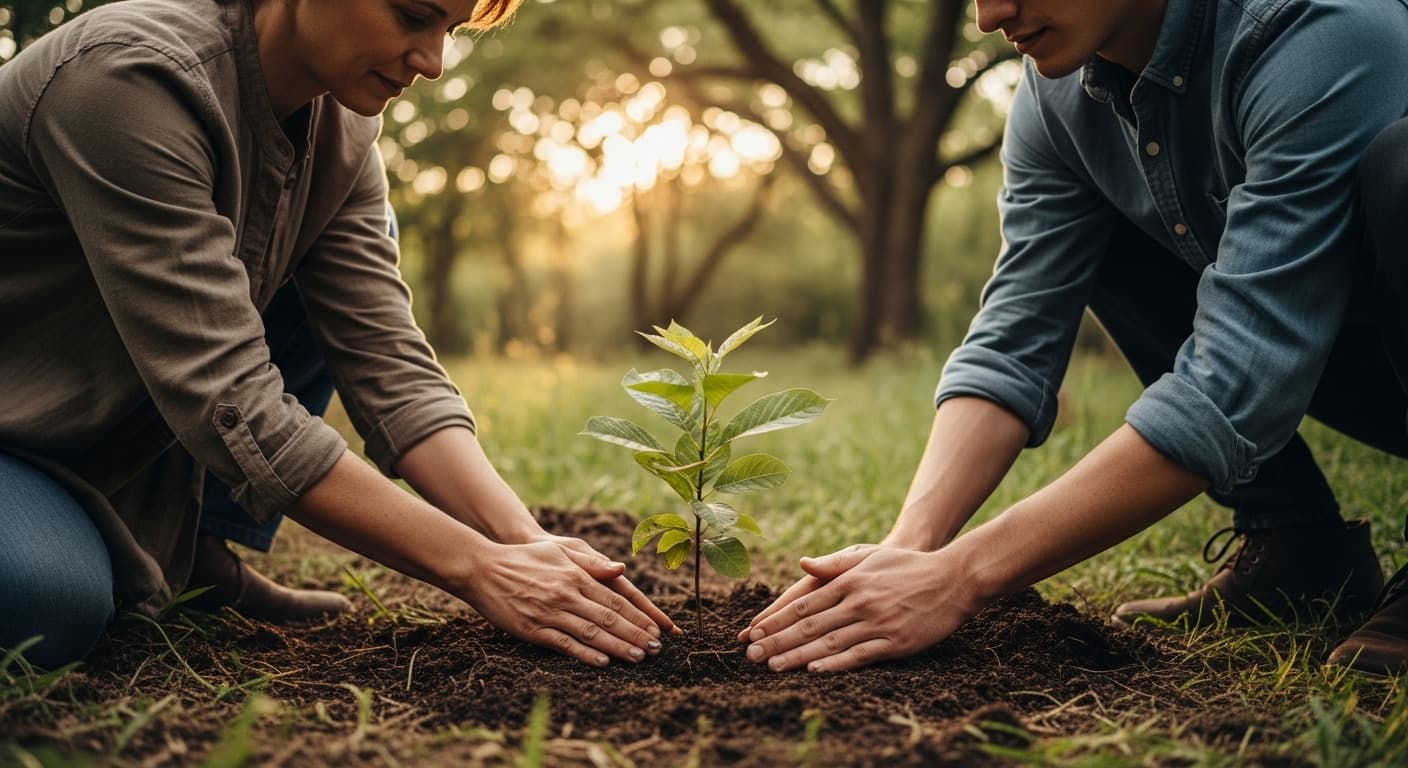
Planting a tree in memory of someone means choosing a living organism — a sapling grown in their honour — that will deepen its roots, expand its canopy, and outlast every other tribute you could offer. Unlike flowers that fade or a card that is eventually set aside, a memorial tree keeps growing, keeps giving oxygen, and keeps marking their place in the world for decades or even centuries.
This guide covers every decision you will face: which species to choose, where to plant, how to plan a meaningful ceremony, and — a step most articles skip entirely — how to use a gifted reforestation programme to plant a tree in a national forest or international restoration project on someone's behalf. Whether you are planting in your back garden next weekend or sending a tree to grow in a wildfire-ravaged forest on the other side of the country, the act carries the same weight: a life ended here, and something living continues because of it.
If you are still in the early days of loss and looking for ways to honour someone across multiple occasions, our guide to death anniversary ideas offers a broader range of commemorations to consider alongside a memorial tree.
Key Takeaways
A memorial tree is a living tribute — it grows, provides habitat, and marks a presence long after every other marker has faded.
Species selection matters — choose a native tree suited to the planting site's climate, soil, and sunlight rather than purely by symbolism.
You have two distinct paths — plant personally in a garden or meaningful location, or use a gifted programme to plant in a reforestation project on their behalf.
A simple ceremony transforms the act — grief counselors find that rituals around planting give families a tangible moment of collective mourning and release.
Care in the first two years is critical — consistent watering and avoiding volcano mulching determine whether the tree establishes or fails.
A digital memorial extends the tribute — pairing a physical tree with an online memorial page keeps stories and photos connected to the living tribute.
Why Families Choose Memorial Trees
Bereavement researchers consistently find that grief is eased when mourners have something active to do — a way to channel love into a tangible outcome. A memorial tree offers precisely that. Unlike a gravestone, it is not static. It changes with every season: bare in winter, budding in spring, full-canopied in summer, ablaze in autumn. For many families, watching those seasonal cycles becomes a private ritual of remembrance, a recurring conversation with someone no longer present.
There is also an ecological dimension that resonates with a growing number of families. A single mature tree sequesters roughly 50 pounds of carbon dioxide annually, provides habitat for birds and insects, stabilises soil, and produces oxygen for its entire lifespan — which, for an oak or a maple, can exceed 200 years. When families come to us after a loss, the most common thing they say is that they want the person's passing to mean something beyond the moment. A memorial tree converts grief into an environmental legacy that will outlast everyone in the room.
Mental health professionals also note that the physical act of planting — digging the soil, settling the roots, tamping down the earth — provides a sensory anchor during a period that can feel entirely without footing. The ground is real. The tree is real. What you are doing for someone you love is real.
The Deep Symbolism of Trees Across Cultures
Nearly every major culture has used trees as symbols of life, memory, and continuity. In Celtic tradition, specific trees were believed to hold the spirits of ancestors. In Japanese culture, the cherry blossom — ephemeral and beautiful — became a meditation on the nature of life itself. In Norse mythology, Yggdrasil, the world tree, connected the realms of the living and the dead. Indigenous cultures across North America have long treated ancient trees as community ancestors, tended across generations.
You do not need to hold any of these beliefs for the symbolism to carry meaning. The basic biology of a tree — its roots going down as its branches reach up, its annual death and renewal, its capacity to outlive every human it has shaded — makes it a naturally resonant memorial for almost any culture or worldview.
How to Plant a Memorial Tree
Choose your planting approach
Decide whether you will plant the tree personally — in a garden, a meaningful outdoor space, or a cemetery with permission — or use a gifted reforestation programme that plants on your behalf in a national forest or restoration project. Both are valid; the right choice depends on whether you want a tree you can visit and tend, or a contribution to a broader ecological legacy.
Select the species
For personal planting, choose a native species suited to your hardiness zone, soil type, and available space at maturity. Consider the person's favourite trees, flowers they grew, or a species native to a place that mattered to them. For reforestation programmes, the partner organisation will select the most ecologically appropriate native species for the planting site.
Secure the location and permissions
For a private garden, check with a horticulturalist about mature spread and root systems near foundations or drainage. For public land, parks, or cemetery grounds, obtain written permission before planting — verbal agreements often fail when staff changes or land ownership shifts. For reforestation programmes, the organisation handles all site selection and permissions.
Plan the planting ceremony
Even a quiet, private ceremony transforms the act from a gardening task into a ritual of remembrance. Choose a reading, a prayer, or a moment of shared silence. Invite the people who mattered most. Consider bringing a small memento to bury near the roots — a letter, a photograph sealed in a waterproof container, or a handful of soil from a meaningful place.
Plant correctly
Dig a hole two to three times wider than the root ball and the same depth. Place the tree so the root flare sits at ground level — planting too deep is the most common cause of long-term failure. Fill with the original soil, firm gently without compacting, and water thoroughly until the soil is saturated. Apply a two to four inch ring of mulch, keeping it away from the trunk to prevent rot.
Establish a care routine
Water deeply once or twice a week for the first two growing seasons, especially during dry spells. Avoid fertilising in the first year — it encourages top growth before roots are established. Check stakes annually and remove them after the first year to allow the trunk to strengthen. Monitor for pests and disease early in spring.
Create a lasting memorial record
Mark the planting date, GPS coordinates if possible, and the tree species on a lasting record — a family document, a memorial page, or a simple photo journal. Many families find that an annual photograph of the tree on the person's birthday becomes one of the most meaningful rituals of ongoing remembrance.
Choosing the Right Tree Species
The most important factor in species selection is ecological fit, not symbolism. A tree planted in the wrong hardiness zone or soil type will struggle or fail — the opposite of what a memorial deserves. Begin with what will thrive, then let meaning follow.
Popular Memorial Tree Species and What They Represent
- Oak (Quercus spp.) — Symbolises strength, endurance, and deep roots. A slow-growing tree that becomes more significant with every decade. Best for large gardens and open spaces; zones 3–9 depending on species.
- Japanese Maple (Acer palmatum) — Offers striking seasonal colour from spring green through summer burgundy to autumn flame. Smaller in scale, suitable for gardens where space is limited; zones 5–8.
- Weeping Willow (Salix babylonica) — Often chosen when the person lost was gentle or poetic in nature. Requires significant space and moist soil near water; zones 6–8.
- Cherry (Prunus spp.) — Flowering cherries bloom every spring with blossoms that return as an annual reminder. A meaningful choice when the loss involved someone who loved spring or whose anniversary falls in that season; zones 5–8.
- Magnolia (Magnolia spp.) — Produces large, fragrant flowers and a graceful silhouette. The star magnolia is a popular choice for mothers, sisters, and grandmothers; zones 4–9 depending on species.
- Birch (Betula spp.) — Elegant white bark visible through all seasons, often associated with new beginnings and resilience. Works well in cooler northern climates; zones 2–7.
- Redbud (Cercis canadensis) — Native to North America and one of the first trees to bloom in spring, with vivid pink-purple flowers. An excellent choice for honouring someone whose life brought early colour to others; zones 4–9.
When in doubt, contact your local cooperative extension service or a certified arborist before purchasing. They can advise on native species for your specific county, soil drainage, and mature canopy size — practical details that nurseries sometimes gloss over when making a sale.
Memorial Tree Selection Checklist
Hardiness zone confirmed — check USDA Plant Hardiness Zone Map or your local equivalent before purchasing any species.
Mature size assessed — verify the tree's mature height and canopy spread against the available space, including distance from buildings, power lines, and drainage.
Soil and drainage tested — dig a test hole 12 inches deep, fill with water, and check drainage rate. Poor drainage kills more trees than drought.
Native species preferred — native trees require less maintenance, support local wildlife, and have a significantly higher long-term survival rate.
Sunlight hours measured — observe the planting site across a full day; most trees need a minimum of six hours of direct sunlight.
Permission in writing — for any location outside your private property, obtain written authorisation before planting.
Where to Plant a Memorial Tree
The location shapes the meaning and the practicality of the tribute in equal measure. Each option carries different considerations around access, longevity, and the type of connection you want to maintain with the tree over time.
Private Gardens and Family Land
Planting in a private garden offers the most direct and enduring connection. You can tend the tree, sit beneath it, watch it grow through every season, and eventually pass it down to the next generation. Funeral directors consistently note that families who plant on their own land often find the tree becomes the most visited and most talked-about memorial they have — more so than a gravestone. The risk is practical: if you sell the property, you may lose access to the tree. Some families choose to plant in the garden of a sibling or parent whose connection to the land is likely to be long-term.
Community Parks and Public Spaces
Many parks departments operate memorial tree programmes, allowing families to plant a tree with a small commemorative plaque in a public space. These programmes typically involve an application fee, species selection from an approved list, and a formal planting date coordinated with parks staff. The advantage is permanence — public parks are maintained and protected in ways private gardens are not. The limitation is access: you may not be able to visit whenever you wish, and the tree belongs to the community, not the family.
Cemetery and Memorial Garden Grounds
Some cemeteries and memorial gardens offer tree burial plots or memorial grove areas where a tree can be planted in conjunction with interment or independently. These programmes vary enormously by provider, and it is worth asking specifically about the species available, the grounds maintenance policy, and what happens to the tree if the cemetery's ownership changes. Get all commitments in writing.
Meaningful Locations with Permission
For someone who loved a particular beach, a stretch of woodland, a university campus, or a community garden, planting in a location connected to their life can feel far more resonant than a generic memorial park. This requires obtaining written permission from the landowner or organisation. Many are willing to accommodate requests — particularly educational institutions, nature reserves, and community organisations — but the process can take several months. Begin enquiries early, and always ask about the organisation's long-term maintenance plans for the area.
“The best time to plant a tree was twenty years ago. The second best time is now.”
Gifted Memorial Tree Programmes: Planting on Someone's Behalf
Most guides to memorial trees focus entirely on the garden-planting option — choosing a sapling, digging a hole, placing it in your own soil. But there is a distinct and increasingly popular alternative that the majority of families never hear about: gifted memorial tree programmes, where an organisation plants one or more trees on your behalf in a national forest, a reforestation project, or an international restoration site.
This is a genuinely different kind of tribute. You are not creating a tree you can visit and tend. Instead, you are contributing a living legacy to a larger ecological story — a forest that was devastated by wildfire, a watershed that lost its tree cover, a community reforestation project in a country where deforestation has caused lasting harm. For families who feel strongly about environmental legacy, or who are planning a memorial for someone who cared deeply about nature, this option often resonates more than a single garden tree.
What Gifted Programmes Typically Provide
- A digital certificate commemorating the planting in the person's name — shareable with family members and suitable for framing.
- Location details specifying the general forest or region where the tree was planted, often with GPS coordinates for the planting area.
- Species information confirming that the planted tree is a native, non-invasive species selected for ecological suitability.
- Registry listing — organisations such as the Arbor Day Foundation maintain online registries where the memorial planting is formally documented.
- Group planting options — many programmes allow families to pool contributions for a grove of trees rather than a single sapling.
Organisations Running Memorial Planting Programmes
Several well-established organisations offer this service. The Arbor Day Foundation has planted more than 30 million dedicated trees through its memorial programme, placing them in forests identified as having the highest ecological need. The Gifted Tree has facilitated over 250,000 memorial plantings in national forests and in over 40 countries since 2013. Trees for a Change focuses specifically on reforestation in national forests recovering from wildfire. The Trees Remember plants in national forests and issues formal certificates with each planting.
One important caveat bereavement counselors often raise: with gifted programmes, you generally cannot visit the specific tree. The planting sites are remote, ecologically sensitive areas where visitor access is restricted or impossible. If your grief process needs a physical location you can return to — a place to sit, to lay flowers, to mark anniversaries — a gifted programme works best as a complement to a local memorial, not a replacement for it.
Combining Both Approaches
Many families choose both. They plant a tree in the garden or a local park for the daily relationship — the one they will walk past, photograph through the seasons, sit beneath on difficult days. And they contribute to a reforestation programme for the ecological legacy — the forest that will grow for centuries, sequestering carbon and sheltering wildlife long after all of them are gone. The two approaches serve different emotional needs, and there is no reason to choose only one.
If you are creating a fuller memorial for someone, consider pairing a tree planting — in either form — with a memorial garden at home, which can incorporate the tree alongside plantings, memorial objects, and a seating area designed for quiet reflection.
Planning a Memorial Tree Planting Ceremony
The act of planting becomes more than horticulture when it is shaped by intention. Grief counselors broadly agree that rituals — even simple, brief ones — help mourners process loss by giving the body something purposeful to do with the emotion that has nowhere else to go. A memorial tree planting ceremony need not be elaborate to be meaningful.
Elements to Consider Including
- A reading or poem — a favourite passage from the person's life, a poem they loved, or something chosen specifically for the occasion. Mary Oliver's poetry is frequently chosen for outdoor memorial ceremonies.
- Shared memories — invite each person present to speak one memory or one quality they will carry forward. Keep it voluntary; grief manifests differently in different people.
- A physical contribution — ask each guest to place a handful of soil in the hole, or water the tree after it is planted. Shared physical participation creates a collective sense of contribution.
- A buried memento — a letter, a photograph sealed in a waterproof container, a small object that meant something to the person. Seal it in a biodegradable container and bury it near the root zone.
- Music — a recording played on a portable speaker, or a live instrument if the setting allows. A song the person loved, played softly, anchors the ceremony in their specific life rather than a generic ritual.
- A closing toast or shared meal — gathering afterward to share food and stories continues the ceremony in a different register, giving people space to shift from formal remembrance to natural storytelling.
For a fuller treatment of how to structure this kind of gathering, read our guide on what a celebration of life involves — many families incorporate a tree planting as the centrepiece of a celebration of life service held outdoors.
Pairing a Living Tree with a Digital Memorial
One thing that consistently surprises families planning a memorial tree is how quickly the physical tribute and the digital record diverge. The tree is planted, seasons pass, and within a few years the stories, photographs, and personal history of the person have scattered across individual phones and fading memories. The tree grows; the narrative around it shrinks.
MemoriTree's tree planting service addresses this directly. When you plant a memorial tree through MemoriTree, the tree is paired with a dedicated digital memorial page where family members can add photographs, stories, and memories over time. The physical tree and the digital tribute grow together — the tree in the soil, the memorial page accumulating the irreplaceable details of a life that would otherwise be lost.
The digital memorial also solves one of the most common practical challenges of gifted tree planting: the inability to visit. When the tree is in a remote national forest or a reforestation project on another continent, the memorial page becomes the place where the family gathers. Cousins who never met, friends from different chapters of the person's life, future generations who were not yet born — they can all find their way to the same place, contribute their own memories, and understand who this person was.
If you are still in the process of planning a fuller memorial and need guidance on the practical steps beyond the tree itself, our complete funeral planning checklist covers everything from the immediate days after a loss through to longer-term commemorations.
Plant a Memorial Tree and Create a Living Tribute
MemoriTree plants a tree in your loved one's memory and pairs it with a digital memorial page where family can gather, share stories, and keep their legacy growing.
Plant a Memorial TreeMemoriTree
MemoriTree editorial team.