
What to Bring to a Memorial Service: 15 Thoughtful Ideas
Wondering what to bring to a memorial service or celebration of life? Discover 15 thoughtful ideas — from flowers and food to meaningful gifts and donations — with guidance on etiquette for every relationship.
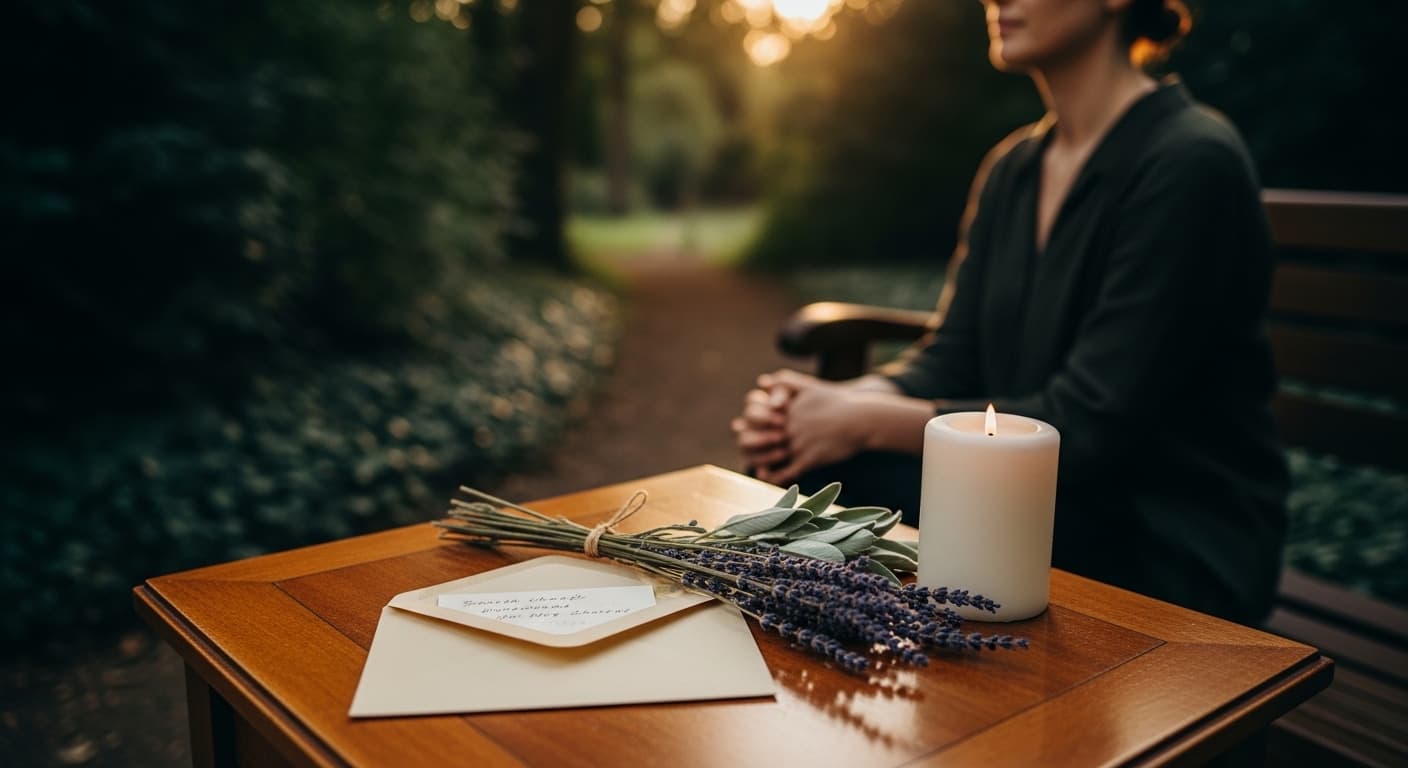
The most appropriate things to bring to a memorial service are sympathy flowers, a heartfelt card, a prepared dish, or a donation in the deceased's name. If you have a close relationship with the family, a personal keepsake — such as a framed photo, memory book, or piece of memorial jewelry — can be one of the most meaningful gifts of all.
Most guests bring nothing beyond their presence, and that is always enough. But if you want to offer something tangible, the 15 ideas below are organised by category so you can choose what fits your relationship, the type of service, and the family's specific wishes.
One important note before you begin: always check the invitation or obituary first. Many families now request donations in lieu of flowers, and honoring that request is more meaningful than any physical gift. If no guidance is given, flowers or a card are universally appropriate.
Key Takeaways
Check the invitation first — if the family has requested donations in lieu of flowers, honor that; it matters more than any gift you choose
Flowers and a card are always appropriate — when in doubt, a simple arrangement and a handwritten note are universally welcomed
Food is practical and deeply appreciated — a prepared dish or meal-train contribution is often the most useful thing you can bring
Celebrations of life have different norms — these events tend to be more celebratory; personal gifts and memory contributions are especially fitting
Donations scale by relationship — $25–$50 for acquaintances and coworkers, $50–$100 for close friends and family
Home services need practical support — if the service is at someone's home, bringing food, drinks, or a helping hand is the most useful contribution
Some things should stay home — loud perfume, elaborate gifts that create obligation, and unsolicited advice are among the things to leave behind
1–3. Flowers and Sympathy Plants
Flowers have been associated with mourning across virtually every culture for thousands of years. They offer beauty in a moment of darkness, and their perishable nature mirrors the fragility of life in a way that feels appropriate rather than uncomfortable. For most memorial services, flowers are the default and most universally understood offering.
1. Cut flower arrangements
White lilies, white roses, and chrysanthemums are the most traditional funeral flowers in Western culture. Lilies in particular carry a long association with restored innocence and the soul's return to a state of peace. If you knew the deceased's favourite flower — even if it falls outside the traditional palette — bringing it is a deeply personal touch.
If you are bringing flowers to the service itself, aim for a modest arrangement that won't overwhelm the space. Large wreaths and standing sprays are typically ordered by the immediate family or funeral home; guests generally bring smaller posies or bouquets. For a full breakdown of what's appropriate when, see our guide on funeral flower etiquette.
2. Potted plants and sympathy plants
A living plant — particularly a peace lily, orchid, or succulent — has a practical advantage over cut flowers: it lasts. Many families appreciate a plant that they can tend to as a living memorial in the weeks and months after the service. Peace lilies are especially popular because they thrive indoors and are associated with sympathy in multiple traditions.
If you choose a plant, include a card with care instructions. Not everyone is a confident gardener, and removing that uncertainty makes the gift more genuinely useful.
3. A tree or nature-based memorial
For families who are environmentally conscious, or who have an outdoor connection to the person they've lost, a tree planting is an especially meaningful memorial gift. Several organizations allow you to plant a tree in someone's name and provide a certificate for the family. Our guide on planting a tree in memory of someone covers the best services and how to make the gift feel personal rather than generic.
When to bring flowers to the service vs. send them ahead: if the service is at a funeral home, bringing flowers on the day is fine. If it's at someone's home, sending an arrangement the day before is often more helpful — it gives the family time to arrange them rather than receiving them mid-service. See the funeral flower etiquette guide for timing guidance.
4. A Sympathy Card with a Handwritten Message
Of all the things you can bring to a memorial service, a handwritten card is the one most likely to be kept for years. Many bereaved families describe reading through condolence cards in the weeks after a service as one of the most comforting rituals of early grief — a tangible record that the person they lost was seen and remembered by others.
The card itself matters far less than what you write inside it. Grief counselors consistently find that specific, personal messages — ones that name the deceased, reference a memory, or describe a quality of the person — are far more comforting than generic condolences. "He always made everyone at the table feel included" lands differently than "You are in our thoughts."
If you're struggling with what to write, our guide on what to write in a sympathy card includes 70+ ready-to-use messages organised by relationship and situation.
One practical note: bring your card sealed and addressed to the family. At a busy service it is easy for unsealed cards to become separated from any accompanying gift.
5–6. Food and Prepared Meals
In most cultures, bringing food to a bereaved household is one of the oldest and most practical forms of sympathy. Grief is physically exhausting. Families coordinating a memorial service are often too depleted to cook, and having meals provided by friends and community removes one significant burden at an overwhelming time.
5. A dish for the reception or post-service gathering
If the memorial includes a reception, bringing a prepared dish is almost always welcome. The most practical choices are foods that travel well, require no reheating, and serve several people — casseroles, sandwich platters, fruit trays, baked goods. Avoid dishes that require last-minute preparation or that have strong odors.
Before bringing food, check with a family member or event organiser. Some receptions are catered; arriving with an additional dish can create logistical complications. A quick message — "I'd love to bring something, is there anything the family needs?" — is always appreciated.
6. Meal train contributions
For close friends and family members, organising or contributing to a meal train is one of the most sustained and practical forms of support. A meal train provides the bereaved household with prepared dinners across a period of days or weeks, covering a time when grief is most acute and cooking feels impossible.
Services like MealTrain and TakeThemAMeal allow a coordinator to set up a schedule and let participants sign up for specific days. If a meal train already exists for the family, asking for the link is a simple and genuinely useful gesture.
Cultural considerations: food customs around mourning vary significantly. Jewish mourning traditions include the seudat havra'ah (meal of condolence), typically featuring round foods like hard-boiled eggs. Muslim families may observe specific dietary restrictions; halal-certified food is always a safe choice. Hindu and Buddhist households may include vegetarians or vegans. When in doubt, ask before bringing food — the question itself signals care and respect.
7. A Donation to a Charity in the Deceased's Name
When a family requests donations in lieu of flowers — a practice that has grown significantly in recent years — contributing to the named charity is the most appropriate and respected response. It honors both the family's wishes and the deceased's values, and it redirects the energy of sympathy into something meaningful to them.
Donation amounts typically scale by your relationship to the family:
Acquaintance or coworker: $25–$50 is appropriate and expected.
Friend or more distant family member: $50–$75 reflects genuine closeness without being excessive.
Close family or intimate friend: $75–$150 or more, depending on your financial circumstances and the depth of the relationship.
Most charity donation pages allow you to leave a message, which the organisation will often forward to the family. Use this to write something personal — it converts a financial contribution into a meaningful acknowledgment of the specific person.
If no specific charity is mentioned but the family has indicated a preference for donations over flowers, a donation to a cause closely associated with the deceased — a cancer charity if they died of cancer, a mental health organization if that resonated with their values — is always appropriate. You can send a card to the family informing them of your contribution.
8–10. Meaningful Personal Gifts
For those with a close relationship to the family, a personal keepsake can be one of the most lasting and meaningful things you bring. Unlike flowers or food, these gifts are intended to be kept — often for a lifetime.
8. A framed photo or photo album
If you have photographs of the deceased that the family may not have — from a shared trip, a period before the family knew them, or simply moments the family wasn't present for — having them printed and framed is an extraordinary gift. Families routinely describe receiving photos they had never seen as one of the most moving experiences of early bereavement.
A small photo album organised around a theme — "years we worked together," "our trip to Italy," "the kids growing up" — carries even more weight. It becomes a curated memory rather than a collection of files.
9. A memory book or contribution to a memory board
Memory books invite friends and family to write down their recollections, stories, and tributes. Many families create these as guest books at the service itself; if one is present, filling it thoughtfully — with a specific story or observation rather than a generic note — is a meaningful contribution.
If you want to bring a memory book as a gift, blank hardcover journals with a handwritten note on the first page work well. Families can use them to collect tributes from others or to record their own memories in the months ahead.
10. Memorial jewelry or keepsakes
Memorial jewelry — pieces that incorporate a small amount of cremated remains, a lock of hair, or a fingerprint impression — is a growing category of grief keepsake. These are appropriate only for the closest family members, and should only be given if you know the family well enough to understand whether it would be welcome.
More accessible keepsakes include engraved items (a necklace with the deceased's name or a significant date), custom candles with a photograph, or a star naming certificate. These sit at the boundary between personal gift and symbolic gesture — meaningful without requiring the intimacy of a jewelry piece.
What to Bring to a Celebration of Life
A celebration of life is intentionally different from a traditional funeral or memorial service. Where a funeral is typically formal, somber, and structured around religious or cultural mourning rites, a celebration of life is designed to honor the person's personality, passions, and the joy they brought to others. That difference in tone creates a different set of norms around what to bring.
The most important distinction: at a celebration of life, personal and celebratory contributions are often more appropriate than traditional sympathy items. A framed photo of a shared memory, a short written tribute, or a small item connected to something the deceased loved — their favourite book, a bottle of their favourite wine, a small piece of art in their aesthetic — can feel more fitting than a white lily arrangement.
That said, the core principles still apply. Check the invitation first. If the family has requested donations or no gifts, respect that. If you bring flowers, bring something that reflects the person's personality — bright, colourful arrangements are often more appropriate at a celebration of life than traditional white or pastel funeral arrangements.
Memory contributions are especially valued at celebrations of life. Many events include a memory board, a guest book, or an open-mic tribute segment. Coming prepared with a short story — written down so you don't have to rely on memory in an emotional moment — is one of the most thoughtful things you can do. For a full guide to what these events look like, see our post on what to expect at a celebration of life.
Wondering how to dress? Our guide on what to wear to a celebration of life covers attire guidance for guests — the dress code is often more relaxed than a funeral, but there are still norms worth knowing.
What to Bring When the Service Is at Someone's Home
Home memorial services are more intimate than those held in a funeral home or place of worship, and the practical needs are correspondingly different. When a family opens their home to mourners, they are managing hosting logistics on top of their grief — which means the most meaningful thing you can bring is something that reduces burden rather than adds to it.
Food and drinks are the single most practical contribution. Finger foods that guests can serve themselves, a case of water, soft drinks, or paper plates and napkins all reduce the family's logistical load without requiring coordination. Call or message ahead to avoid duplicating what others are bringing.
An offer to help — to greet guests at the door, to manage the food table, to collect cards — is often more valuable than any physical item. At an in-home service, the family may be so overwhelmed by their grief and their hosting duties that a trusted friend who simply takes on a practical task is the most meaningful presence in the room.
Avoid large or elaborate gifts at a home service. In a private home, a large flower arrangement or an oversized framed print creates a logistics problem at an already logistically complicated moment. If you want to bring something personal, a small framed photo or a handwritten card is far easier to receive graciously.
If the home service follows cremation and there is no formal viewing, a small candle with a card — something the family can light in the weeks ahead — is a quiet and appropriate gift that works well in any domestic space.
Gift Ideas by Your Relationship to the Family
The right thing to bring depends significantly on how well you knew the deceased and the bereaved family. What feels appropriate for a close friend may feel presumptuous from a coworker. The guidance below is organised by relationship type.
Close family member
You have the widest latitude. Personal keepsakes, framed photos, memory books, and substantial donations are all appropriate. You may also bring food for the household, offer to stay and help after the service, or organise practical support for the weeks ahead. Your presence and sustained support will matter more than any gift.
Close friend
A heartfelt card with a specific memory is essential. A framed photo, a plant, or a donation to the family's named charity are all appropriate. If you are comfortable doing so, offering concrete practical help — "I'll come over on Thursday and cook" — is more meaningful than a standing offer to help if needed.
Acquaintance or coworker
A sympathy card is the most important thing. Flowers or a modest donation ($25–$50) are appropriate. Avoid overly personal gifts that might feel presumptuous given the nature of your relationship. Signing a shared card from a team or department is always appropriate and often more meaningful than a dozen individual cards.
Neighbor or community member
A card and a prepared dish are both appropriate and practical. A plant that the family can keep in their home or garden is a good choice for neighbors — something that will last and that they can see from their everyday life. Keep it simple and genuine; a neighbor who shows up with food and a genuine word often means more than a near-stranger arriving with an elaborate gift.
Cultural and Religious Gift Considerations
Gift and condolence norms vary considerably across cultures and faiths. Understanding the family's background can help you choose something that feels respectful rather than inadvertently at odds with their traditions.
Christian traditions
Flowers, cards, and food are all appropriate. Sympathy plants — particularly peace lilies — are widely given at Christian services. White flowers carry strong associations with purity and resurrection in many Christian denominations. Donations to a church or Christian charity are appropriate when named by the family.
Jewish traditions
Cut flowers are generally not brought to a Jewish funeral; the tradition places less emphasis on floral displays. During shiva (the seven-day mourning period), bringing food to the house of mourning is a deeply embedded tradition. Kosher food is essential if you are not certain the family is Conservative or Reform. Donations to Jewish organizations or charities named by the family are appropriate and appreciated.
Muslim traditions
Islamic mourning practices traditionally discourage elaborate gifts and displays. Food brought to the family's home is appropriate, but must be halal. Flowers may be brought to the grave but are not a standard condolence gift in many traditions. A sincere card expressing condolences is always appropriate; avoid excessive sentiment that might be culturally misaligned.
Hindu and Buddhist traditions
Many Hindu and Buddhist families are vegetarian; all food brought should be meat-free unless you know otherwise. Flowers are appropriate at Hindu services, particularly marigolds, which carry ritual significance. Buddhist memorial services often include offerings of incense or flowers at an altar; following the lead of the family is the safest guide. In both traditions, a donation to a relevant charitable cause is often a meaningful alternative to a physical gift.
What NOT to Bring to a Memorial Service
Strong perfume or cologne — memorial services often include elderly or immunocompromised attendees; strong scents can cause genuine physical discomfort in a confined space
Alcohol (unless explicitly appropriate) — unless the celebration of life has indicated a drinks-focused event, bringing alcohol without asking can create awkwardness; many grieving families are not in a place to receive it well
Elaborate gifts that create obligation — a large, expensive gift can leave a bereaved family feeling obligated to acknowledge and thank you at a moment when they have no capacity for that
Flowers when donations have been requested — if the obituary requests donations in lieu of flowers, bringing flowers anyway signals that you haven't read their wishes; it creates a logistics problem at an already complicated moment
Young children without prior arrangement — check with the family before bringing young children; some services are intentionally adult-only, and the presence of children can shift the tone in ways the family hasn't planned for
Unsolicited advice or silver linings — do not bring your perspective on why this happened or how the bereaved should feel; plain presence is what they need, not explanations
Religious items to a secular service — a Bible, rosary, or religious print brought to a secular service or to a family of a different faith can feel intrusive rather than comforting, regardless of your intentions
Your own grief as the centrepiece — it is appropriate to feel and express grief; it is not appropriate to make your grief the focus of interactions with the immediate family, who are carrying a heavier weight
11. Digital Condolences and Online Memorial Contributions
Not every meaningful condolence takes a physical form. For many families — particularly those dispersed across different cities or countries — digital expressions of sympathy are not lesser alternatives to physical ones. They are often the primary way that extended community comes together around a loss.
Online memorial pages allow friends and family to leave written tributes, share photographs, and contribute to a living record of the person who died. These contributions arrive across days and weeks rather than in the immediate rush of the service itself — which means they can be one of the most sustained and comforting forms of support a family receives.
If the family has created a memorial page, contributing to it is a meaningful act. Write something specific — a memory, a quality you admired, a moment you won't forget. Sharing a photograph the family may not have is especially valued.
Social media tributes can also be meaningful, particularly if the deceased had a public profile or if a community hashtag has formed around the loss. If you post a tribute, tag it thoughtfully and avoid anything that might feel performative to the family. A private message expressing condolences is often more meaningful than a public post; many grieving families find large public expressions difficult to process in the immediate aftermath of loss.
Memorial Service Etiquette: 5 Steps to Getting It Right
Check the invitation or obituary before you arrive
The invitation or obituary will tell you whether flowers are welcome, whether donations are preferred, and whether any specific wishes apply. Honoring stated preferences is the single most respectful thing you can do. If you're unsure what's expected more broadly, our guide on what to expect at a celebration of life covers the full range of service formats.
Arrive on time and sign the guest book
Arriving on time (or slightly early if you want to speak with the family before it fills up) allows you to offer your condolences in a more personal setting. Always sign the guest book — it becomes a keepsake for the family and records that you were present. Write more than your name: a brief sentence acknowledging the person who died means everything.
Keep your condolences brief and specific
At a busy service, the immediate family will speak with dozens or hundreds of people. Keep your condolence brief but make it specific: "The fishing trips he took us on are something I'll carry forever" is more meaningful than "He was a wonderful man." For more guidance, see our guide on what to say at a funeral.
Follow the family's lead on tone
Some services are solemn; others — particularly celebrations of life — are deliberately joyful. Follow the family's tone. If they are sharing funny stories and laughing through tears, that's an invitation to do the same. If the service is quiet and formal, match that register. The family sets the tone; guests reflect it.
Offer concrete support, then follow through
If you offer to help — to bring a meal, to pick up relatives from the airport, to come by in the coming weeks — make it specific and then actually do it. Bereavement professionals consistently find that the bereaved are surrounded by offers of help in the first week and left largely alone from week three onwards. Follow-through matters far more than the original gesture.
“The rituals of condolence — the card, the flower, the dish of food — are not mere formality. They are the community's way of saying: you are not alone in this. We were here when they lived, and we are here now.”
Create a Living Memorial They Can Visit Anytime
A memorial service lasts a few hours. A MemoriTree memorial page gives friends and family a place to share stories, photos, and tributes — a lasting tribute they can return to for years to come.
Create a Free Memorial PageMemoriTree
MemoriTree editorial team.