
Memorial Service vs Funeral: Key Differences, Costs & How to Choose
What's the real difference between a memorial service vs funeral? Compare timing, costs, format, and structure — plus a decision framework to help your family choose the right service.
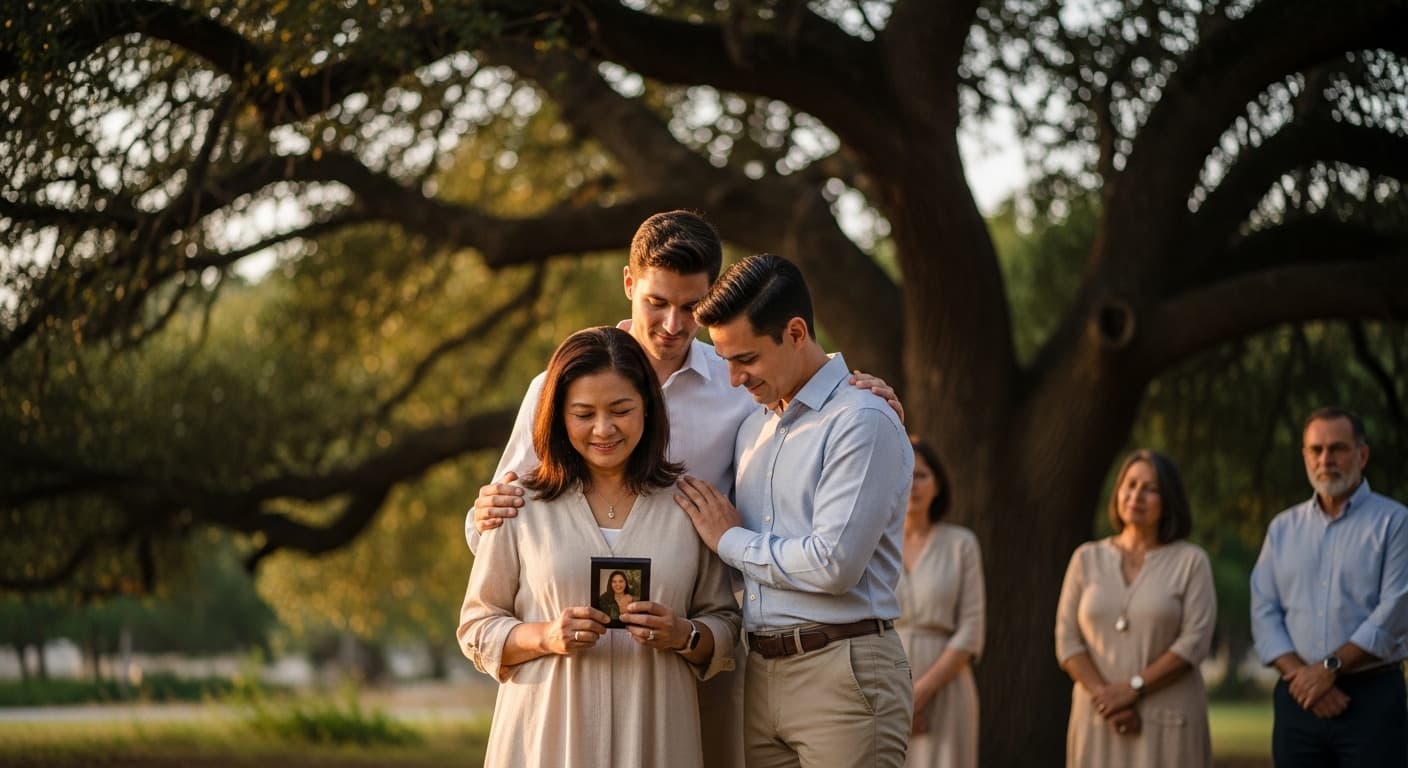
A memorial service vs funeral comes down to one core distinction: a funeral is held with the body present, typically within days of death, while a memorial service takes place without the body and can be scheduled weeks or months later. This single difference shapes everything else — the timing, venue, cost, tone, and how much flexibility your family has to plan.
If you're trying to decide which is right for your family, you're not alone. Most people encounter this decision during one of the most emotionally taxing moments of their lives, and the terminology can feel confusing when funeral homes, religious traditions, and family expectations all pull in different directions. This guide breaks down every meaningful difference between a funeral and a memorial service — including costs, format, etiquette, and when families choose to do both — so you can make a decision that truly honors the person you've lost.
Key Takeaways
Body present vs absent — the defining difference. Funerals have the body present; memorial services do not.
Timing flexibility — funerals happen within days; memorial services can be held weeks, months, or even a year later.
Cost difference is significant — the NFDA reports a median funeral cost of $7,848 (with viewing); memorial services typically range from $1,000 to $3,000.
Tone and structure vary — funerals tend to follow formal religious or cultural rites; memorial services are more flexible and personalized.
You can do both — many families hold a small, private funeral followed by a larger memorial service or celebration of life.
Neither is 'better' — the right choice depends on your loved one's wishes, your family's needs, and practical circumstances.
What Is a Funeral Service?
A funeral is a ceremony held in the presence of the deceased person's body, usually in an open or closed casket. Because the body must be prepared and preserved, funerals are typically held within three to seven days of death. This timeline can feel urgent for grieving families, but it also provides an immediate, structured space for communal mourning.
Funerals frequently incorporate religious or cultural traditions. They are most commonly held in funeral homes, churches, mosques, synagogues, or other places of worship, and are usually officiated by a clergy member or religious leader. The ceremony often follows a set order of service — prayers, scripture readings, a eulogy, and hymns — and typically concludes with a committal service at a cemetery or crematorium.
Key characteristics of a funeral:
- Body is present (open or closed casket)
- Held within 3-7 days of death
- Usually takes place at a funeral home, church, or place of worship
- Often follows formal religious or cultural rites
- Typically includes a viewing or visitation period
- Ends with burial, entombment, or cremation
- Officiated by clergy, a funeral director, or a family member
The structured nature of a funeral often brings a sense of predictability during a chaotic time. For many families, seeing the body provides a tangible sense of closure that helps the reality of the loss settle in. Funeral directors report that the viewing period, while difficult, is one of the elements families most frequently say helped them begin to grieve. For a complete walkthrough of every step involved, see our funeral planning checklist.
What Is a Memorial Service?
A memorial service is a remembrance gathering where the body of the deceased is not present. If the person was cremated, an urn may be displayed, but the focus shifts from the physical remains to the person's life, personality, and legacy. This key distinction — the absence of the body — gives families significantly more flexibility in every aspect of planning.
Without the time pressure of body preservation and burial logistics, a memorial service can be held weeks, months, or even a year after death. This allows out-of-town family members time to arrange travel, gives the immediate family space to process their initial shock, and lets the organizers plan a gathering that truly reflects who the person was.
Key characteristics of a memorial service:
- Body is not present (urn may be displayed)
- Can be held at any time — days, weeks, or months after death
- Location is flexible: parks, restaurants, family homes, community centers, beaches
- Tone is generally less formal, with emphasis on personal stories and music
- No viewing or visitation period
- Can be officiated by anyone — clergy, a friend, a family member, or a celebrant
- Often includes personal touches: photo slideshows, favorite songs, memory-sharing activities
Memorial services are highly customizable. Families can hold them in a place that held meaning for the deceased — a favorite park, the family home, a restaurant they frequented — rather than being limited to funeral homes or religious venues. The tone can range from quiet and reflective to celebratory and warm, depending on what feels right.
Memorial Service vs Funeral: Side-by-Side Comparison
The table below summarizes the most important differences between a funeral service vs memorial service. Use this as a quick reference when discussing options with your family or funeral director.
Timing
Funeral: Typically within 3-7 days of death, dictated by body preservation requirements and religious customs.
Memorial service: Completely flexible. Can be held the following week, the following month, or on a significant date like the person's birthday.
Location
Funeral: Funeral home, church, mosque, synagogue, or cemetery — venues equipped to handle the logistics of the body.
Memorial service: Anywhere meaningful — a family home, park, restaurant, community center, beach, or even a virtual gathering for distant loved ones.
Body Presence
Funeral: Body present in open or closed casket. Viewing or visitation is common.
Memorial service: Body is not present. An urn with cremated remains may be displayed, along with photos and personal items.
Tone and Structure
Funeral: Tends to follow a formal order of service — prayers, scripture, eulogies, hymns. The atmosphere is typically solemn and structured.
Memorial service: More conversational and personalized. Emphasis on storytelling, music, shared meals, and interactive activities. The structure can be as loose or as organized as the family prefers.
Dress Code
Funeral: Conservative and dark attire is traditionally expected — black, navy, or dark grey suits, dresses, or modest outfits.
Memorial service: Often more relaxed. Business casual is common, and some families request specific themes — the person's favorite color, Hawaiian shirts, team jerseys — especially if the gathering is framed as a celebration of life.
Who Typically Attends
Funeral: Close family, extended family, friends, colleagues, community members. Attendance is often larger because the timing is immediate and widely announced through obituaries.
Memorial service: The guest list is often more intentional. Because scheduling is flexible, families can invite specific people and plan around travel constraints. Some memorial services are intimate; others are large public gatherings.
How Much Does a Funeral vs Memorial Service Cost?
Cost is one of the most practical — and often most stressful — factors in deciding between a funeral vs memorial service. The difference can be substantial.
Average Funeral Costs
According to the National Funeral Directors Association (NFDA), the median cost of a funeral with viewing and burial in the United States is approximately $7,848. This figure includes:
- Basic services fee: $2,300 — covers the funeral director's planning, coordination, and overhead
- Embalming: $800 — required for open-casket viewings in most states
- Casket: $2,500 (median) — ranges from $1,000 for a simple model to $10,000+ for premium options
- Viewing and ceremony use of facilities: $800 — rental of the funeral home's rooms for visitation and the service
- Hearse and service vehicle: $350 — transportation of the body to the ceremony and burial site
- Burial plot and grave opening: $1,000-$4,000 — varies significantly by region and cemetery
- Headstone or grave marker: $1,000-$3,000 — not always included in initial estimates
These costs can climb further with add-ons like printed programs, flower arrangements, obituary placements, and reception catering. In metropolitan areas, families frequently report total costs between $10,000 and $15,000.
Average Memorial Service Costs
Memorial services typically cost between $1,000 and $3,000, though the range is wide because families have much more control over every element. Because there is no body to prepare, the most expensive components of a funeral — embalming, casket, hearse, burial plot — are eliminated or replaced with lower-cost alternatives.
- Venue rental: $0-$1,500 — free if held at a family home or public park; modest if at a community center or restaurant
- Officiant or celebrant: $200-$500 — if you choose to hire one rather than having a family member lead
- Catering or potluck: $200-$2,000 — depending on formality and guest count
- Photo displays and printed materials: $50-$300 — slideshows, memory boards, programs
- Cremation (if not already completed): $1,000-$3,000 — direct cremation without a viewing is the most affordable option
Funeral directors typically advise families to request an itemized price list (required by the FTC's Funeral Rule) so they can compare costs line by line. Many families are surprised to learn they can choose specific elements without purchasing a bundled package.
“The question isn't which service is better — it's which service allows the people who loved them to grieve, remember, and begin healing in the way that feels most natural to them.”
Celebration of Life vs Memorial Service vs Funeral
A third option — the celebration of life — adds another layer to the decision. While the terms "memorial service" and "celebration of life" are sometimes used interchangeably, there are meaningful differences in tone and intent.
How a Celebration of Life Differs
A celebration of life is a specific type of memorial service that emphasizes joy, personality, and the individual's unique story rather than mourning their absence. The atmosphere is often upbeat — think favorite music playing, guests wearing bright colors, stories that make people laugh alongside the ones that make them cry.
- Funeral: Formal, structured, body present, often religious. Focused on mourning and saying goodbye.
- Memorial service: Body absent, flexible timing and venue, moderately structured. Focused on remembering and honoring.
- Celebration of life: Body absent, highly personalized, often informal or themed. Focused on celebrating who they were.
Many families blend elements from all three. You might hold a formal graveside committal for immediate family, followed by a larger celebration of life the following weekend. For a deeper look at this comparison, see our guide on celebration of life vs funeral differences. And if you're planning a celebration of life, our list of 50 celebration of life ideas covers everything from memory displays to ceremony rituals.
How to Decide: A Family Decision Framework
Start with their wishes
Did your loved one express a preference for burial or cremation? Did they leave written instructions, mention their wishes to a family member, or include guidance in a will or advance directive? Their stated preferences should carry the most weight in your decision. If no wishes were expressed, consider what you know about their personality and values — someone who valued tradition may have wanted a formal funeral, while someone who valued simplicity may have preferred a memorial gathering.
Consider the practical timeline
Are key family members traveling from overseas or across the country? Will the immediate family need time to process the shock before planning a large gathering? If the answer to either question is yes, a memorial service — held weeks later — may be more realistic than a funeral within the first week. Some families hold a small, private service immediately and plan a larger memorial for when everyone can attend.
Assess your budget honestly
A traditional funeral with viewing and burial typically costs $7,000-$12,000. A memorial service can be organized for $1,000-$3,000. If finances are a concern, be direct with your funeral director about your budget — they are required by law to provide itemized pricing, and most will work with you to find options that respect both the deceased and your financial situation.
Factor in religious and cultural expectations
Some religious traditions require specific practices — Jewish law calls for burial within 24 hours when possible, Islamic tradition calls for washing and burial as soon as practical, Hindu tradition emphasizes cremation — that may determine the type of service. If your family spans multiple traditions, a memorial service held after the religiously required rites can honor both the tradition and the broader community.
Ask what your family needs emotionally
Some families need the immediate structure and closure a funeral provides — the ritual of gathering, the finality of the committal, the comfort of a familiar liturgy. Others need time and space before they're ready for a gathering. Neither response is wrong. If your family is divided, doing both — a small funeral for those who need it now, and a memorial service later for the wider circle — is a compassionate compromise that more families are choosing.
When Families Choose Both: The Hybrid Approach
One thing that consistently surprises families during the planning process is learning they don't have to choose one or the other. A growing number of families are opting for a hybrid approach — and in our experience helping families through memorial planning, this is often the arrangement that brings the most peace.
The most common pattern looks like this:
- Immediate private service: A small, private funeral or graveside committal within the first week, attended only by the closest family members. This handles the logistical necessities — burial or cremation — and gives the inner circle a chance to grieve together without the pressure of hosting a large gathering.
- Delayed public memorial: A larger memorial service or celebration of life held two to six weeks later, after the immediate shock has eased and out-of-town loved ones have had time to arrange travel. This gathering focuses on storytelling, community, and honoring the person's life in a way that feels thoughtful rather than rushed.
This approach addresses one of the most common tensions families face: the people who need the closure of an immediate funeral and the people who aren't emotionally ready for a large gathering within the first week. Instead of forcing everyone into the same timeline, the hybrid model meets both needs.
Bereavement counselors consistently note that families who feel pressured to host a large event too quickly often look back on the gathering with regret — not because it went badly, but because they were too numb to be fully present for it. A delayed memorial service, held when the family is ready, tends to be more meaningful for everyone involved.
What to Expect as a Guest: Etiquette for Funerals and Memorial Services
If you've been invited to a funeral or memorial service and aren't sure what to expect, here are the key differences from a guest's perspective.
Attending a Funeral
- Dress conservatively — dark, modest attire is standard. Black, navy, or dark grey are safe choices.
- Arrive on time — funerals follow a set order of service and late arrivals are noticeable.
- Prepare for a viewing — if there is an open casket, you are not required to approach it. Simply being present in the room is enough.
- Express condolences briefly — a simple "I'm so sorry for your loss" to the family is appropriate. You don't need to say the perfect thing.
- Follow the procession — if attending the burial, turn on your headlights and follow the hearse to the cemetery.
For more on what to bring and how to prepare, see our guide on what to bring to a memorial service and what to say at a funeral.
Attending a Memorial Service
- Check the invitation for dress code — some families request specific attire or colors. When no guidance is given, business casual is appropriate.
- Bring something to share — a photo, a written memory, or a dish for the table if it's a potluck-style gathering.
- Be prepared to participate — many memorial services include interactive elements like memory jars, open mic sharing, or guest books with prompts.
- There is no viewing — the body is not present. Photos, personal items, and possibly an urn may be displayed instead.
- The tone may be lighter — laughter is not only acceptable but often encouraged. Memorial services tend to celebrate the person's life alongside mourning their absence.
If the memorial service is framed as a celebration of life, our guide on what to wear to a celebration of life can help you dress appropriately.
Planning Your Memorial or Funeral Service
Regardless of which type of service you choose, the planning process benefits from having a clear starting point. Here are the first steps funeral professionals recommend:
- Gather the family's input early. Before making decisions, ask close family members what matters most to them. Differing expectations — especially across generations or cultural backgrounds — surface quickly, and addressing them early prevents conflict later.
- Contact a funeral home. Even if you're planning a memorial service rather than a funeral, a funeral home can coordinate cremation, help with legal paperwork (death certificates, permits), and provide guidance on local regulations. You are not obligated to use all their services.
- Set a budget. Decide what the family can afford before reviewing options. Funeral homes are required by the FTC to provide an itemized General Price List. Request it and compare line by line.
- Choose the elements that matter. Not every service needs every element. A meaningful gathering can be simple — a few speakers, a favorite song, a shared meal. Let the person's personality guide what you include, not a standard package.
- Create a lasting tribute. Whether you hold a formal funeral or an informal memorial, consider creating a permanent space where memories can continue to be shared. A digital memorial page allows friends and family from anywhere in the world to contribute photos, stories, and messages — keeping the person's legacy alive long after the gathering ends.
For a detailed, step-by-step walkthrough, our complete funeral planning checklist covers everything from the first phone call to post-service follow-up.
Preserve Their Memory in a Lasting Tribute
Whether you're planning a funeral, memorial service, or both — create a free digital memorial where loved ones can share photos, stories, and messages from anywhere in the world.
Create a Free MemorialMemoriTree
MemoriTree editorial team.