
How to Plan a Celebration of Life: Complete Guide With Checklist and Timeline
A step-by-step guide to planning a meaningful celebration of life — including a sample program, budget breakdown, theme ideas, activity suggestions, and a week-by-week planning timeline.
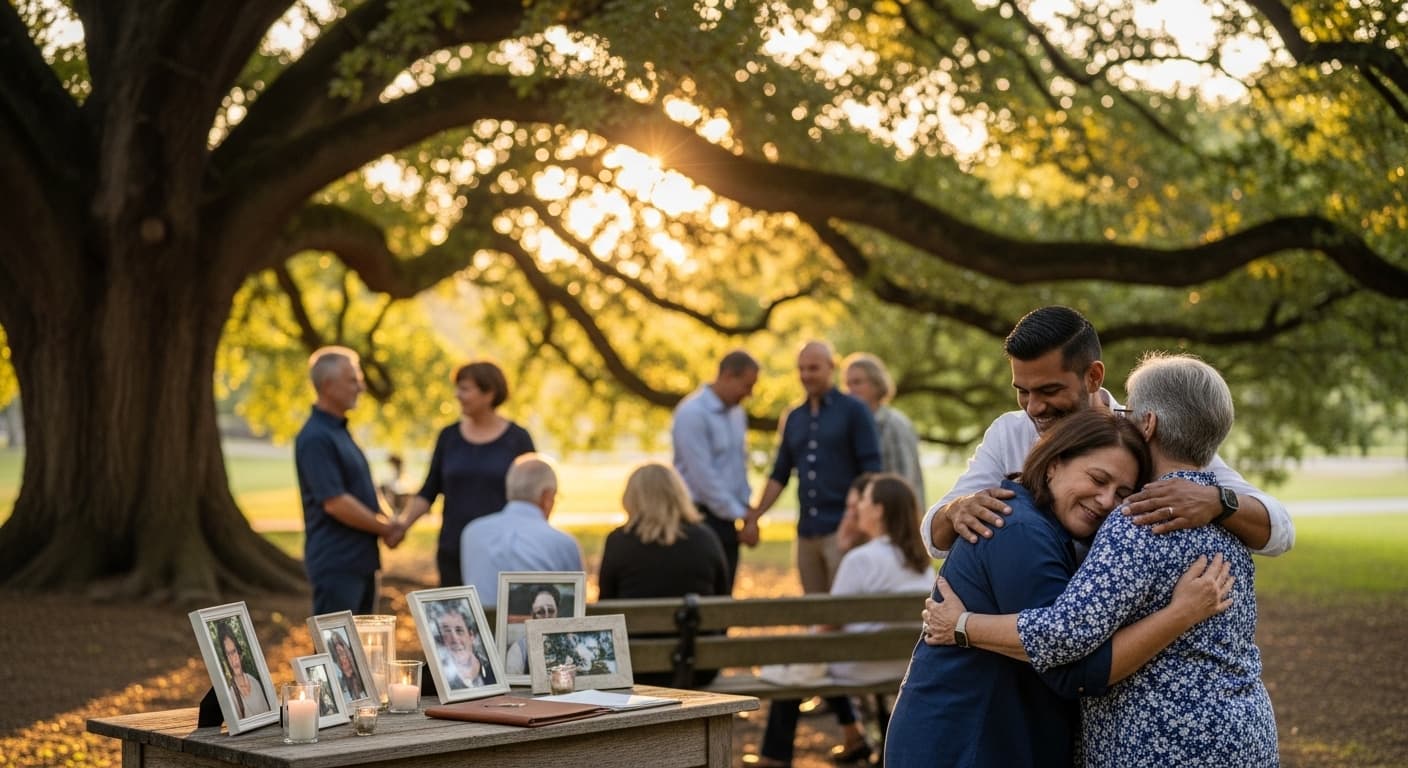
Planning a celebration of life means choosing a venue, setting a date, inviting guests, designing a program, and creating activities that reflect who the person was. Unlike a traditional funeral, there are no fixed rules — which makes thoughtful planning more important, not less.
This guide walks through every step of the process, from the first decisions you make in the days after a death to the final moments of the event itself. It includes a full sample program with time blocks, a tiered budget breakdown, theme ideas, music and reading suggestions, and a 12-item planning checklist — everything you need in one place.
For inspiration on what to include in the event itself, see our companion guide on 50 celebration of life ideas. If you want to know what to expect as a guest, our guide on what to expect at a celebration of life covers the full experience.
Key Takeaways
Start with the person, not the logistics — the best celebrations begin by answering: what made them distinctly themselves? Everything else flows from that.
Two to four weeks is the ideal planning window — long enough to do it properly, short enough that grief is still communal rather than individual.
A written program is essential — even a simple one-page order of events helps guests feel grounded and prevents dead air.
Budget varies enormously — intimate gatherings can be held for $500; larger events typically run $1,000–$5,000+. Itemising costs early prevents surprises.
Interactive activities matter most — memory jars, photo boards, and candle-lighting create participation rather than passive attendance.
Delegate ruthlessly — the person closest to the deceased should not be managing logistics on the day. Assign a coordinator.
A digital memorial extends the gathering — guests who cannot attend in person still need a place to share memories. A free MemoriTree memorial page makes this simple.
How to Plan a Celebration of Life: Step by Step
Step 1 — Make the first three decisions
Before anything else, settle on three things: approximately when (week or month), approximately where (home, venue, outdoor space, or virtual), and approximately how many people. These three answers constrain every other decision, so making them early prevents wasted planning. You do not need precise answers yet — "mid-April, a venue that holds 80 people, roughly 60 guests" is enough to start.
Step 2 — Choose a theme or guiding concept
A theme is not a decoration scheme. It is a frame that helps every element of the event feel coherent: the music, the flowers, the food, the activities, the language in the program. Common themes include a hobby or passion (gardening, fishing, cooking), a place they loved (the coast, the mountains, a particular city), or a value they embodied (generosity, music, family). See the Theme Ideas section below for five worked examples.
Step 3 — Book the venue
Popular venues book up quickly, especially on weekends. Options include: private homes (most personal, free, but require more logistical planning), community halls and churches (mid-range cost, flexible, usually accessible), restaurants and private dining rooms (easy catering, natural atmosphere), parks and gardens (beautiful but weather-dependent — always have a backup plan), and funeral homes (many now offer celebration-focused rooms that do not feel clinical). Confirm capacity, parking, kitchen access, AV equipment, and any noise restrictions.
Step 4 — Set the guest list and send invitations
For celebrations of life, a wider net is usually better. Consider people the deceased knew across every chapter of their life: childhood friends, colleagues, neighbours, community members. Digital invitations (Evite, Paperless Post) are fast and free; printed invitations feel more considered for larger events. Include the date, time, venue address, parking instructions, dress code if any, and an RSVP contact. If the event is hybrid, include the livestream link.
Step 5 — Design the program
A program is the backbone of the event. It tells guests what is happening, in what order, and creates a sense of shared experience. Even a simple one-page document — printed or displayed on a screen — prevents confusion and gives the event shape. At minimum, include a welcome, two or three speakers or readings, a musical element, and a closing. See the sample program in the next section for a full two-hour template.
Step 6 — Plan activities and interactive elements
The activities that people remember most are not the speeches — they are the moments of participation. A memory jar where guests write and share a memory. A memory board or photo wall they help build. A candle-lighting ceremony. A tree planting. A song everyone knows and sings together. Plan at least two interactive elements; three is better. See the Interactive Activities section below for detailed suggestions.
Step 7 — Arrange catering, music, and flowers
Catering can be as simple as a home-made spread or as formal as a full-service caterer; both are appropriate. Music should include at least one song the person loved, and ideally one that guests can sing along to. For flowers, consider plants or seedlings as alternatives — they can be taken home and grown as living reminders. Confirm all vendors at least one week in advance and provide a point-of-contact who is not the primary bereaved family member.
Step 8 — Assign roles and prepare for the day
The person closest to the deceased should not be managing logistics on the day. Assign a coordinator who is not grieving intensely. Roles to assign: venue liaison, greeter, MC or program facilitator, A/V manager, photographer, and food coordinator. Brief everyone 24 hours before. Have printed copies of the program and a list of everyone's contact numbers. Prepare a quiet space for family members who need a moment away from the crowd.
Sample Celebration of Life Program: A Full Two-Hour Template
This is the section that most planning guides omit — a complete, time-blocked program you can use as a template. Adapt it to fit your event, but keep the structure. A well-paced celebration does not feel rushed or drag on. Two hours is the sweet spot for most gatherings.
Before the Event (30 minutes before start)
- Arrival music playing softly — a playlist of songs the person loved
- Photo display or memory board set up for guests to browse on arrival
- Memory jar and cards placed near the entrance with a simple prompt: "Write a memory, a word, or a wish"
- Greeters at the door — ideally people who knew the deceased well enough to introduce guests to each other
Program Order
2:00 pm — Welcome (5 minutes)
The MC or a close family member opens the event. They introduce themselves briefly, explain the purpose of the gathering, and set the tone. Something like: "We are here today not to mark an ending, but to celebrate a life that shaped all of ours." They briefly outline the order of events so guests feel oriented.
2:05 pm — Opening tribute (10 minutes)
The first and often most personal eulogy or tribute. Usually delivered by a child, sibling, or close friend. This is the piece that brings the person into the room — specific stories, specific qualities, a sense of who they really were. For guidance, see our guide on how to write a eulogy.
2:15 pm — Musical moment (5 minutes)
A song that meant something to the person. This can be a live performance, a recorded track played through speakers, or a video of them singing or playing. If the song is something guests know, invite them to sing along. Music does the emotional work that words cannot.
2:20 pm — Second tribute or reading (8 minutes)
A second speaker — a colleague, a neighbour, a childhood friend — who offers a different dimension of the person. Alternatively, a poem or literary reading selected to reflect their values or their life. For words-of-comfort suggestions, see our guide on what to say at a funeral.
2:28 pm — Open sharing (15 minutes)
Guests are invited to share a memory, anecdote, or simple thank-you. The MC facilitates — calling on raised hands, keeping each contribution to one or two minutes. This is often the most moving part of the entire event. Brief the MC to gently redirect if anyone speaks at length, and to invite quieter guests by name if the room falls silent.
2:43 pm — Candle-lighting or moment of reflection (7 minutes)
A shared ritual gives the gathering a moment of stillness. Options: candle lighting where each guest lights a small taper from a central flame; a moment of silence followed by a single spoken word from each person; or a guided reflection read aloud by the MC. Keep it short and intentional.
2:50 pm — Closing remarks and farewell activity (10 minutes)
The MC closes the formal program. This is the moment for any announcements (tree planting later in the week, a memorial page online, thank-you notes). If you are doing a balloon or butterfly release, seed packet give-away, or any outdoor element, transition here. The closing should feel like a beginning: "Today is not goodbye — it is a promise to carry them forward."
3:00 pm — Reception (60 minutes)
Food, drink, music, and free conversation. This is often where the most meaningful connections happen — where old friends find each other, where stories get told in small groups, where the person's life is celebrated informally and joyfully. The memory board and jar should remain accessible. Have someone circulate to collect written memories at the end of the event.
4:00 pm — Informal close
No formal ending needed. The music fades, guests begin to leave naturally. Have one or two people designated to help with clear-up so family members can say their goodbyes without worrying about logistics.
Celebration of Life vs Funeral: What Is the Difference?
The terms are sometimes used interchangeably, but they represent meaningfully different approaches to honouring someone who has died. Understanding the distinction helps you plan an event that matches what the person would have wanted and what the family needs.
For a detailed side-by-side comparison, see our full guide on memorial service vs funeral.
Celebration of Life
- Typically held days to weeks after death — timing is flexible
- Focused on joy, gratitude, and the life lived rather than the grief of the loss
- Usually no body or casket present
- Dress code is often casual or themed rather than formal black
- Venue can be anywhere meaningful — a garden, a restaurant, a favourite hiking spot
- Structure is flexible: often includes music, food, interactive activities, open sharing
- Religious elements are optional, not expected
- May happen in addition to, or instead of, a traditional funeral
Traditional Funeral
- Usually held within a week of death, often tied to burial or cremation logistics
- Focuses on mourning and the acknowledgment of loss as well as the life
- Body or casket often present
- Dress code is typically formal — dark or muted colours
- Venue is usually a funeral home, place of worship, or graveside
- Structure follows a traditional order of service — hymns, eulogy, prayers
- Religious or cultural rituals are central for many families
Neither is more valid than the other. Many families hold both: a private funeral for close family, followed by a larger public celebration of life that allows the wider community to gather and remember.
Celebration of Life Budget Breakdown
One of the most common questions families face is what a celebration of life costs. The answer varies enormously depending on size, venue, and choices — but understanding the range early prevents surprises and allows you to allocate wisely.
Intimate Gathering — approx. $500
- Venue: $0 — hosted at home or a donated community space
- Catering: $150–$200 — home-prepared food, potluck contributions from friends and family
- Flowers / decor: $50–$100 — simple arrangements, plants from a garden, candles
- Printed programs: $20–$30 — home-printed or digital only
- Music: $0 — a curated Spotify playlist through a Bluetooth speaker
- Photography: $0 — a trusted friend with a good phone
- Memory activities: $20–$50 — memory jars, card stock, pens, a printed photo board
- Miscellaneous: $50 — unexpected expenses, thank-you cards, parking
Mid-Range Event — approx. $1,000–$3,000
- Venue hire: $200–$600 — community hall, restaurant private room, or garden venue
- Catering: $500–$1,200 — light catering service, appetisers and drinks for 30–80 guests
- Flowers / decor: $150–$300 — florist arrangements, candles, photo display materials
- Printed programs: $50–$100 — professionally printed, folded booklets
- Music: $100–$400 — a solo musician or DJ for part of the event
- Photography: $200–$500 — a semi-professional photographer for 2–3 hours
- A/V equipment: $100–$200 — screen, projector, and microphone rental if not included in venue
- Memory activities: $50–$150 — memory board, printed photos, seed packets or candles as take-home gifts
- Miscellaneous: $100–$200 — tip, last-minute items, transport
Large or Elaborate Event — approx. $3,000–$5,000+
- Venue hire: $500–$1,500 — dedicated event space, park permit, or premium outdoor venue
- Full catering service: $1,500–$3,000 — sit-down or buffet meal for 100+ guests with wait staff
- Flowers and full decor: $500–$1,000 — professional florist, custom signage, themed installations
- Live musician or band: $500–$1,500 — multi-hour performance
- Professional photography and video: $500–$1,500 — includes edited photos and a short tribute video
- Printed programs and custom items: $200–$400 — premium printing, personalised take-home gifts
- A/V and livestream setup: $300–$600 — for hybrid events with remote guests
- Coordinator or day-of planner: $300–$800 — frees family to be present rather than managing logistics
- Miscellaneous: $200–$500 — tips, contingency, transport, unexpected costs
Note: Costs above are estimates for the United States in 2026. Prices vary significantly by location, season, and vendor.
Celebration of Life Theme Ideas
A theme gives the event coherence — it is the thread that connects the decor, the music, the food, the activities, and the spoken word. The best themes are not invented; they are discovered by asking: what was this person most themselves doing?
1. Nature and the Outdoors
For someone who loved hiking, gardening, camping, or simply being outside. Hold the gathering outdoors if possible — a garden, a park, a nature reserve. Decor: wildflowers, potted plants, wood elements, string lights. Music: acoustic, folk, or classical. Activity: guests plant a tree together or each take home a seed packet. Refreshments: seasonal, farm-fresh food.
For the tree-planting activity, see our guide on planting a tree in memory of someone.
2. Music and Performance
For someone who played an instrument, sang, or whose identity was deeply tied to music. Feature live music prominently — invite musician friends to perform. Display instruments. Create a playlist of the songs they loved and share it with guests to take home. Activity: a singalong to their favourite song. Decor: vintage records, sheet music, music-themed prints.
3. Travel and Adventure
For someone who travelled widely or had a love of a particular place or culture. Display maps with pins marking places they visited. Serve food from countries they loved. Play music from those regions. Show photos from their travels on a screen or printed photo wall. Activity: guests write on a world map the place they most associate with the person.
4. Hobby or Craft
For someone defined by a passion — woodworking, baking, painting, fishing, knitting, sport. Display examples of their work or craft. Involve guests in a related activity: a simple craft they can take home, a recipe they made, a sport they loved played informally before or after the event. This theme works especially well for children and younger guests.
5. Cultural or Heritage Celebration
For someone with strong cultural or ethnic roots. Incorporate traditional music, dress, food, and ritual. Invite elders to speak in the community's tradition. Use the person's heritage as a lens for understanding their life — the values, the stories, the community that shaped them. This type of celebration often becomes a powerful act of cultural memory as well as personal tribute.
For more theme ideas and activity suggestions, see our guide on 50 celebration of life ideas.
Music and Readings for a Celebration of Life
Music is the most powerful emotional tool available at a celebration of life. It bypasses language and creates shared feeling in a room. The right song can do more in three minutes than any eulogy. Readings provide a different kind of resonance — a poem or passage that feels chosen for this person and this moment.
Song Suggestions by Mood
Reflective and tender: "Somewhere Over the Rainbow" (Israel Kamakawiwoole version), "The Living Years" (Mike + The Mechanics), "Hallelujah" (Leonard Cohen), "Bridge Over Troubled Water" (Simon and Garfunkel), "What a Wonderful World" (Louis Armstrong)
Celebratory and joyful: "Don't Stop Me Now" (Queen), "Happy" (Pharrell Williams), "I Will Remember You" (Sarah McLachlan), "Brown Eyed Girl" (Van Morrison), "Here Comes the Sun" (The Beatles)
Singalong and communal: "You've Got a Friend" (Carole King / James Taylor), "Lean on Me" (Bill Withers), "Don't Stop Believin'" (Journey), "Dancing in the Street" (Martha Reeves), "We Are Family" (Sister Sledge)
Whenever possible, use the person's own music — songs they loved, songs they played, songs they danced to. The most moving musical moments at celebrations of life are always the ones that are unmistakably theirs.
Poetry and Reading Suggestions
- "Do Not Go Gentle into That Good Night" by Dylan Thomas — fierce, defiant, for a life lived with intensity
- "When Great Trees Fall" by Maya Angelou — one of the most used poems at celebrations of life; deeply comforting
- "Remember" by Christina Rossetti — gentle, forward-looking, avoids sentimentality
- "The Ship" (attributed to Bishop Charles Henry Brent) — the "they have only sailed beyond your sight" metaphor; works across religious and secular contexts
- "Funeral Blues" by W. H. Auden — raw, honest; for a loss that feels total
- "Gone From My Sight" by Henry Van Dyke — peaceful, short, suitable for opening or closing moments
Interactive Activities for a Celebration of Life
The moments guests remember most are not the speeches. They are the moments when they participated — when they were given something to do, something to share, something to take home. Plan at least two interactive elements. Three is better. Here are the most meaningful options, drawn from what families report as most impactful.
Memory Table
Set up a table with objects, photos, and artefacts from the person's life. Include items guests can touch: a book they loved, a hat they always wore, a hobby tool or instrument, a collection they kept. This becomes a natural gathering point — people stop, pick things up, and begin telling stories to whoever is standing nearby.
For photo display ideas, see our guide on 7 beautiful memory board ideas.
Candle Lighting Ceremony
Each guest receives a small taper candle. A central pillar candle is lit by a family member as a symbol of the person's life. Guests then light their own candles from the central flame. The MC can invite each person to say a name, a word, or a short memory as they light their candle. This works for gatherings of 10 to 100 — at larger events, light row by row and the effect is still profound.
Memory Jar
Place a large glass jar with blank cards and pens near the entrance or on each table. Guests write a memory, a word, a joke, an observation — anything. At the end of the event, the family takes the jar home. Many families report that reading through the jar in the weeks after the celebration becomes one of their most treasured rituals.
Release Ceremonies
Balloon releases, butterfly releases, and lantern releases all create a collective moment of letting go. Note that balloon releases raise environmental concerns — biodegradable balloons or alternatives (seed bombs, butterfly releases with farmed Painted Lady butterflies from reputable suppliers, paper lanterns in appropriate outdoor settings) are preferable. Whatever form the release takes, the moment of collective release tends to be deeply cathartic.
Memory Tree
Provide a printed or painted tree outline — or a real bare branch in a vase. Guests write messages on luggage-tag-style paper leaves and tie them to the branches. By the end of the event, the tree is full. The family takes it home as a visible, lasting reminder of everyone who gathered.
For more ideas on how to bring people into the experience, see our guide on what to bring to a memorial service.
Food and Refreshments
Food at a celebration of life is not incidental — it is one of the primary ways the person's character shows up in the room. A spread of dishes they loved, a signature cocktail named after them, a recipe from their handwriting on a card beside the dish: these details matter more than the quality of the catering.
Format Options
- Buffet or grazing table: most common; allows guests to serve themselves and move around freely
- Afternoon tea: elegant, accessible for all ages, relatively easy to self-cater
- Potluck: each guest brings a dish — ask them to bring something the person loved, or a dish from a memory they have. This format is participatory and often produces the most meaningful conversations
- Seated meal: most formal, best for smaller gatherings where you want guests to stay and talk; requires more planning and catering budget
- Drinks reception: for an event held in the evening, or as the reception portion of a longer event
Personal Touches
- Display a recipe card in their handwriting beside a dish they made
- Serve their favourite foods, even if they are unusual — this is a celebration of who they were
- Name dishes on small cards: "Grandad's spaghetti sauce", "Mum's lemon drizzle"
- Create a signature drink: their favourite spirit and mixer with a name on a card at the bar
- Provide take-home recipe cards printed with their most-loved recipes
Celebration of Life Planning Checklist
Four or more weeks before: Set the date, time, and approximate guest count. Choose a venue and confirm availability.
Three weeks before: Send invitations (digital or printed). Brief speakers and ask for confirmations. Book any paid vendors (caterer, musician, photographer).
Two weeks before: Finalise the program order. Choose music. Select poems or readings. Order flowers or decor.
Ten days before: Confirm all RSVPs. Order printed programs if applicable. Gather photos for display.
One week before: Confirm all vendors. Brief the coordinator/MC. Prepare memory jar cards and activity materials.
Three days before: Prepare or collect any food being made at home. Print programs. Test A/V equipment.
One day before: Brief all role-holders (greeter, coordinator, A/V manager). Charge devices. Prepare a quiet space at the venue.
Morning of: Deliver flowers and decor. Set up memory table, photo display, and memory jar. Brief greeters.
During the event: Start music before guests arrive. Have someone photograph and document. Collect completed memory cards at the close.
After the event: Send thank-you notes or messages. Share a link to the online memorial for those who could not attend.
In the weeks after: Compile photos into a shared album or memorial page. Plant any trees or living tributes ordered for the event.
Ongoing: Keep the memorial page updated with memories guests continue to share in the months ahead.
Celebration of Life Planning Timeline
The planning window for a celebration of life is typically two to six weeks after the death. Unlike a funeral, which is constrained by burial or cremation logistics, a celebration can be timed to allow out-of-town family to travel, to await a meaningful date, or simply to allow the immediate shock of grief to settle before planning begins.
Two Weeks Before the Event
- Venue confirmed and deposit paid
- Invitations sent and RSVP deadline set
- Speakers confirmed and briefed on timing (aim for 5–10 minutes each)
- Caterer or food plan finalised
- Music playlist or live musician confirmed
- Program drafted and shared with key family for review
- Activity materials ordered (memory jar, candles, photo printing)
One Week Before the Event
- Final RSVP count confirmed with venue and caterer
- Programs printed or finalised for digital display
- Photo display printed and mounted
- All vendors confirmed with a named contact
- Coordinator briefed on full schedule and has everyone's phone numbers
- Quiet room or space identified at the venue for family members who need a break
- Online memorial page created and link included in any communications
Day of the Event
- Arrive 60–90 minutes before guests. Set up decor, photo display, memory table, and activity materials
- Test A/V equipment: sound, projector, microphone
- Brief all role-holders — MC, greeters, A/V manager, food coordinator
- Start arrival music 30 minutes before the scheduled start time
- Designate one person to manage time during the formal program
- Have the MC remind guests about the memory jar and any take-home items at the start of the reception
- Collect all written memory cards before guests leave
“A celebration of life is not a denial of grief. It is grief held alongside gratitude — the acknowledgment that this person's time here was worth honouring, not just mourning.”
Create a Free Online Memorial to Extend the Celebration
A MemoriTree memorial page gives family and friends a place to share stories, photos, and memories long after the celebration ends — and gives those who could not attend a way to be part of it. Create one in minutes, free.
Create a Free Memorial PageMemoriTree
MemoriTree editorial team.